

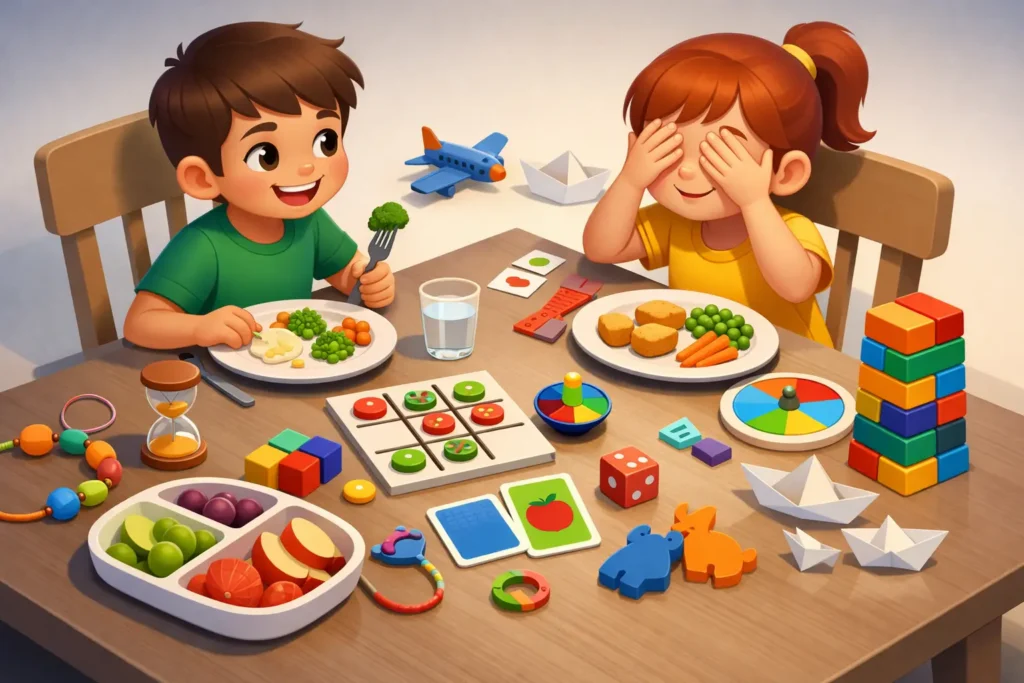
If dinner at your house can go from one bite to a full standoff in under two minutes, you are not alone. For many families, mealtime games for kids are not about being silly for the sake of it. They are a practical way to lower pressure, spark curiosity, and help a hesitant eater stay at the table without turning every meal into a negotiation.
The key is choosing games that support eating instead of distracting from it. A good mealtime game keeps the mood light, gives your child a sense of progress, and avoids the old cycle of begging, bribing, or counting down “just three more bites.” That shift matters. Kids often eat better when they feel safe, playful, and in control of small steps.
Why mealtime games for kids can work so well
Young children learn through play. They also resist pressure fast, especially when food already feels loaded. When a meal becomes a test, many kids dig in harder. When it becomes a playful challenge with low stakes, they are more open to looking, touching, smelling, licking, or tasting.
That does not mean every game works for every child. Some kids love imagination. Others respond better to visual progress or simple choices. And if a child is overtired, sick, or deeply anxious about a specific food, even the best idea may flop that night. That is normal. The goal is not instant perfection. It is more calm, more willingness, and more small wins over time.
What makes a mealtime game helpful instead of stressful
Before jumping into ideas, it helps to set a few gentle boundaries. The best games are easy to start, easy to stop, and never feel like a trap. If your child thinks the game is really a trick to force eating, trust disappears fast.
A helpful game keeps the focus on participation and progress. It celebrates effort, whether that means taking a bite, trying a tiny taste, or interacting with a new food in a non-scary way. It also works best when parents stay relaxed. The game should carry some of the emotional weight so you do not have to.
10 mealtime games for kids to try tonight
1. The mystery bite reveal
This one works beautifully for kids who love surprises. Set up a hidden picture, toy, or simple reward that gets revealed one small section at a time after each bite or taste. The bite is not the whole story. The fun is in what happens next.
This approach works because it gives immediate payoff without making dessert the prize. The reward is playful attention and curiosity, not sugar or bargaining. If your child is very resistant, start with tiny expectations. A pea-sized bite can still count.
2. Color detective
Ask your child to find colors on the plate and talk about them like clues. “Do we have something green and crunchy? Something orange and soft?” For some kids, noticing food feels easier than eating food. That is still progress.
Once they are engaged, you can invite a next step. “Which color should we try first?” The choice lowers resistance. It also helps children feel they have a role in mealtime instead of being managed through it.
3. Crunch, squish, or scoop?
Texture is a big deal for picky eaters, even when adults do not realize it. Turn texture into a guessing game. Ask your child to describe foods with fun words and decide whether each bite is crunchy, smooth, chewy, juicy, or fluffy.
This works especially well for children who reject food quickly. Sometimes they need language for what feels off. A child who says, “I do not like carrots,” may really mean, “I do not like cooked mushy carrots.” That difference can help you adjust what you serve next time.
4. Tiny taste challenge
For kids who shut down at full portions, go very small. Offer tiny tastes and let your child earn a point, sticker, or cheerful celebration for each one. The win is trying, not clearing the plate.
This is where many parents feel relief. A tiny taste challenge feels possible. It takes the pressure off both sides. You are no longer asking for a dramatic turnaround, just one manageable step.
5. Food face storyteller
Use bite-sized foods to make a silly face or simple character on the plate. A cucumber smile, blueberry eyes, shredded cheese hair. Then give the character a name and a quick story.
This will not be the right fit for every family or every dinner. On a busy Tuesday, you may not want to build art out of peas. But for a child who resists even sitting down, a playful plate can soften the start of the meal.
6. The bite countdown
Some kids feel calmer when they know exactly what is expected. Try a short, clear countdown with visual progress. Three bites, three stars. Four tastes, four taps. Then they are done with the challenge.
The trade-off is that this can feel too transactional if overused. Keep it light and flexible. It should feel like a game, not a contract.
7. Yes, no, maybe
Ask your child to sort foods mentally into three categories: yes, no, and maybe. The magic is in the maybe pile. It gives room for hesitation without turning hesitation into refusal.
Parents often feel stuck between serving only safe foods and insisting on foods that trigger drama. The maybe approach creates a middle ground. It says, “You do not have to love this yet, but you can stay curious.”
8. Copycat bites
Take a bite together and invite your child to copy the shape, sound, or motion. Maybe everyone takes a crunchy dinosaur bite or a tiny mouse nibble. This works because younger kids often enjoy imitation more than instruction.
It also feels connecting. Instead of one person directing and one person resisting, you are sharing the moment. That shift can lower the emotional temperature fast.
9. Build-your-own plate
Turn dinner into a simple assembly game. Tacos, rice bowls, mini pizzas, snack plates, and wraps all work well. When kids choose what goes where, they often feel braver about tasting the final result.
That said, choice needs guardrails. Too many options can backfire, especially with young children. Offer two or three components to choose from rather than opening the whole fridge.
10. Progress path
Create a simple path with boxes, dots, or stepping stones. Each bite moves your child one step closer to the finish. The reward at the end can be applause, a silly sound, a hidden image, or a mini celebration.
This is one reason gamified tools can be so helpful for families dealing with repeated dinner battles. They make progress visible. Instead of hearing “eat your food” again and again, your child sees themselves moving forward one bite at a time. That is a big emotional difference, and it is exactly why tools like Easy Eaters feel so doable in real life.
When games help and when they do not
Mealtime games can be a huge relief, but they are not magic in every moment. If your child is melting down, deeply tired, or already overwhelmed by the meal, adding a game may feel like too much. On those nights, simpler is better. Serve one safe food, keep the mood calm, and let the evening be ordinary.
It also helps to watch your own energy. If the game makes you feel like a cruise director who has to perform through dinner, it is probably not sustainable. The best mealtime games for kids reduce stress for parents too. They should feel supportive, not like one more thing to manage.
How to keep the mood light without adding pressure
A few small shifts make a big difference. Praise effort more than outcomes. Keep your voice neutral if your child says no. End the game before it gets stale. And resist the urge to raise the stakes with “If you do five bites, then you get…” That can bring you right back to bargaining.
It is also okay to repeat the same game often. Kids like predictability. If one playful approach helps your child take a few more bites and keeps dinner calmer, that is not boring. That is working.
The real goal is a calmer table
Parents often start looking for games because they want their child to eat more vegetables or stop refusing dinner. Of course they do. But the deeper win is a calmer table. Less dread before dinner. Fewer power struggles. More chances for your child to build confidence around food instead of fear.
That kind of progress usually comes from small moments that repeat. One tiny taste. One silly countdown. One meal that feels lighter than yesterday. If a game helps your child stay engaged long enough to try, explore, or even just sit with less stress, that is not a gimmick. That is a reset worth keeping.