

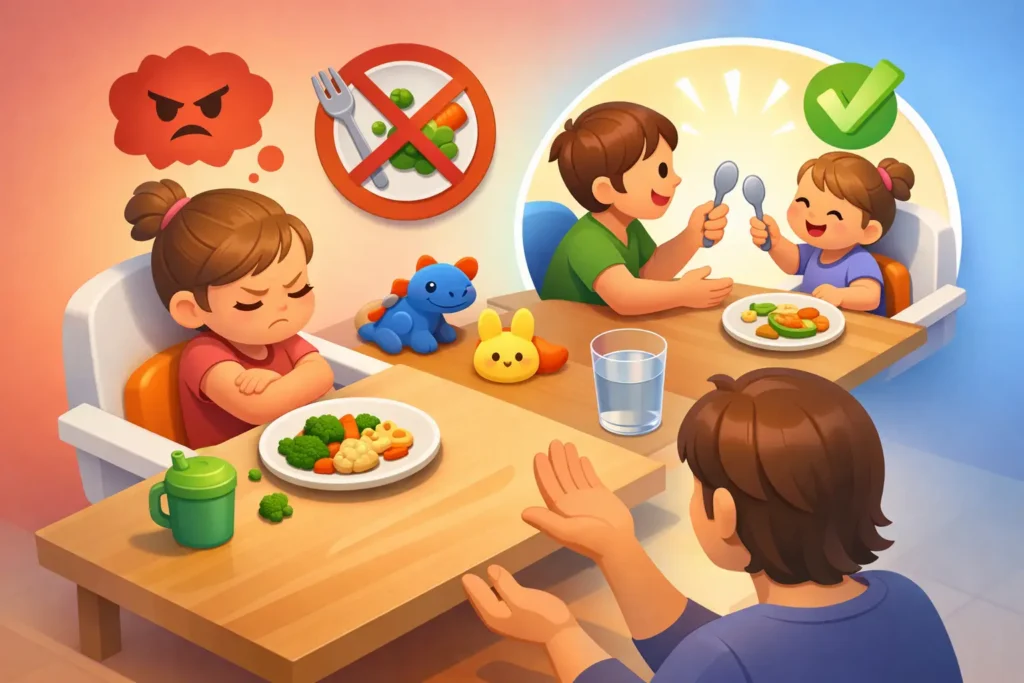
Last night’s pasta is still on the floor, your toddler is suddenly terrified of carrots they ate yesterday, and somehow dinner turned into a negotiation, a protest, and a cleanup job all at once. If dinner battles with toddlers feel like a nightly event in your house, you are far from alone – and you are not doing anything wrong.
The hard part is that these moments can feel deeply personal. You made the meal. You want your child to eat. You know they need nutrition. Then they refuse the food, ask for crackers, melt down in the high chair, or wander away after one bite. It is exhausting, especially when it keeps happening.
The good news is that toddler mealtime struggles are common, and they usually make more sense once you see what is driving them. Better yet, there are ways to lower the pressure, reduce the power struggle, and help your child build a healthier relationship with food one small win at a time.
Why dinner battles with toddlers happen so often
Toddlers are in a stage of life where independence grows faster than logic. They want control, they are sensitive to change, and they often use the only tools they have to express big feelings – saying no, throwing food, crying, or refusing to come to the table.
Dinner also tends to hit at the worst possible time. By evening, many young kids are tired, overstimulated, and running low on patience. Parents are too. That matters. A child who might tolerate a new food at lunch can completely reject it at 6:15 p.m. after a long day.
Hunger is only one piece of the puzzle. Toddlers also react to texture, smell, color, temperature, and whether foods are touching. Sometimes refusal is about caution, not stubbornness. Sometimes it is about needing predictability. And yes, sometimes it really is about control.
That is why pushing harder often backfires. The more a child feels cornered, the more likely they are to dig in. What starts as, “Please just take one bite,” can quickly become a full-blown standoff.
What makes dinner battles worse
Most parents do not create mealtime stress on purpose. It builds slowly through repetition. You ask, they refuse. You offer alternatives, they reject those too. You try encouragement, bargaining, praise, pressure, distraction, and eventually frustration. By the end, nobody feels good.
A few patterns tend to make things harder.
When every dinner feels high stakes, kids sense it. If the table becomes the place where adults plead, correct, or monitor every bite, children can start resisting before the meal even begins.
Short-order cooking can also create a trap. It makes sense in the moment because everyone is tired and hungry, but when a toddler learns that refusing dinner leads to a preferred food, refusal can become part of the routine.
Then there is pressure dressed up as encouragement. Comments like “just one bite,” “you liked this before,” or “eat this and then you get dessert” are incredibly common. They come from care. But to a toddler, they can make food feel like a test instead of a normal part of family life.
A calmer approach works better than a tougher one
If your current routine feels tense, the goal is not to become a perfect mealtime parent. It is to lower the emotional temperature.
That starts with a mindset shift. Dinner is not a performance. It is not proof of your parenting. And your toddler’s refusal tonight does not predict what they will eat next month. Children often need many exposures to a food before they feel comfortable trying it. Progress can look very small before it looks obvious.
A calmer approach also separates your job from your child’s job. You decide what is offered, when dinner happens, and where it is served. Your child decides whether to eat and how much. That can feel uncomfortable at first, especially if you are used to trying to make every meal count. But it reduces the tug-of-war that keeps many families stuck.
How to reduce dinner battles with toddlers tonight
Start with one tiny change, not a complete mealtime overhaul. The most effective shifts are usually the simplest.
Serve at least one food your child usually accepts alongside the family meal. This does not mean making a separate dinner. It means placing something familiar on the table so the meal feels safer and less all-or-nothing.
Keep portions small, especially for new or less preferred foods. A large serving can feel overwhelming to a toddler. A single piece of broccoli or one spoonful of rice is often easier to tolerate than a full scoop.
Use neutral language when you talk about food. Instead of “you need to eat that,” try “the chicken is warm” or “the peas are green and round.” This sounds simple, but it helps remove pressure.
If your child does not eat much, stay steady. Avoid rushing in with snacks the minute dinner ends unless that is already part of your routine. Kids learn patterns quickly. When the meal stays predictable, they begin to understand what to expect.
And when dinner goes sideways, try not to turn the moment into a lecture. Calmly end the meal when it is clearly done. Tomorrow is another chance.
When your toddler wants the game, not the fight
For many families, the missing piece is motivation without pressure. Toddlers love play. They love progress they can see. They love feeling successful. That is exactly why turning mealtime into something interactive can change the mood so quickly.
Instead of making bites feel like demands, a playful system gives them a purpose. One bite reveals part of a picture. Another earns progress. A few brave tastes lead to a badge, celebration, or little moment of excitement. Suddenly the focus shifts away from conflict and toward curiosity.
That does not mean every meal becomes magical. Some nights your child will still be tired, picky, or stubborn. But play can soften the resistance. It gives parents a way to encourage trying without hovering, bribing, or begging.
This is where a tool like Easy Eaters can feel like a reset. It meets children where they already are – motivated by games, visuals, and small rewards – while helping parents step out of the role of enforcer.
What progress actually looks like
One of the biggest frustrations with picky eating is that parents often expect progress to show up as a clean plate. In real life, it usually looks much smaller.
Progress might be your toddler sitting at the table for ten calmer minutes. It might be touching a new food, licking it, or taking one bite without tears. It might be eating a familiar meal without a negotiation. These wins count because they build trust and confidence.
It also helps to remember that appetite changes from day to day. A child who barely eats dinner may make up for it earlier or later. Looking at patterns across a week is usually more helpful than judging one meal in isolation.
If your child is growing well and has energy, a light dinner is not automatically a problem. If you have concerns about growth, swallowing, sensory issues, or very limited food variety, that is a separate situation and worth discussing with your pediatrician. There is a difference between common picky eating and a more serious feeding challenge.
The goal is a better feeling at the table
Parents often come to dinner hoping for more vegetables and fewer refusals. Those things matter. But the deeper goal is usually peace.
You want to sit down without bracing yourself. You want your child to feel safe around food, not pressured by it. You want family dinner to feel like family time again, even if it is still messy and imperfect.
That is why gentle structure plus playful encouragement can work so well. It lowers the stakes, creates more positive repetitions, and helps children practice trying instead of defending. Over time, those moments add up.
If you are in the thick of it, give yourself credit. Showing up to another hard dinner takes patience. Trying a new approach takes courage. And choosing connection over conflict, even when you are tired, is real progress too.
Tonight does not have to be perfect to be better. Sometimes the first win is simply getting through dinner with less pressure, one bite, one smile, and one calmer evening at a time.