

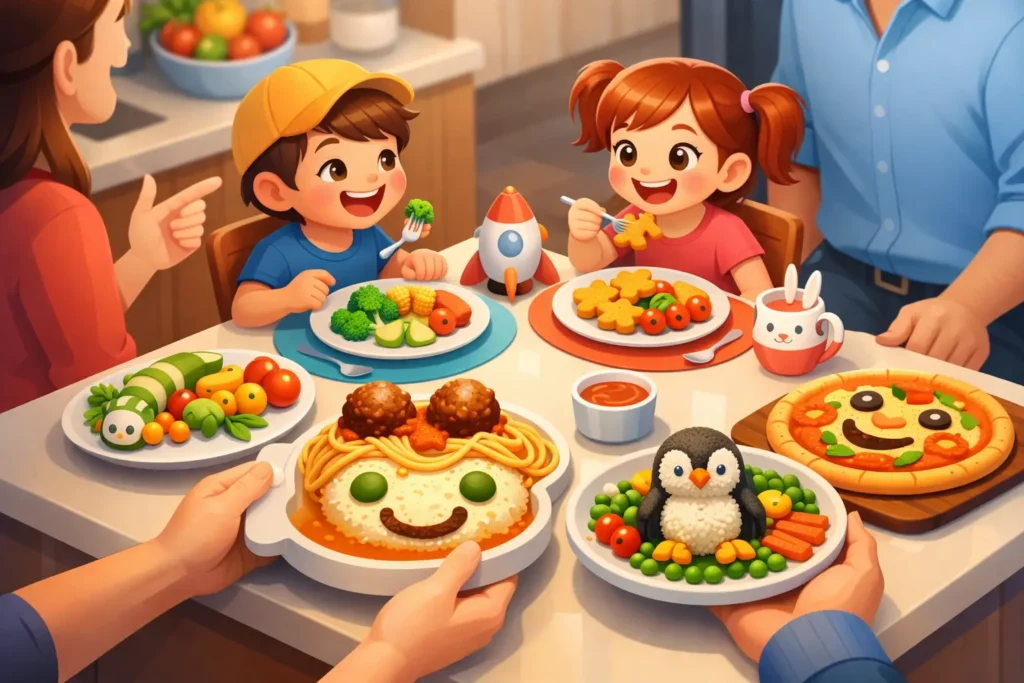
Some nights, dinner feels less like a meal and more like a standoff. You serve the food, your child stares at it like it is deeply suspicious, and within minutes everyone is tired, frustrated, and saying things they did not plan to say. If you are wondering how to make dinner fun for kids, the goal is not to put on a show every night. It is to take the pressure down, bring the curiosity up, and help your child feel like mealtime is a place where good things happen.
That shift matters more than parents are often told. Kids who feel watched, pushed, or negotiated with at the table usually focus less on the food and more on the tension around it. When dinner feels playful and safe, even small steps count. A sniff, a lick, a tiny bite, or simply leaving a new food on the plate without a meltdown can all be real progress.
Why dinner gets hard so fast
Most parents are not doing anything wrong. Dinner is simply where a lot of pressure lands at once. Everyone is hungry. Parents want one solid meal to go well. Kids are tired, overstimulated, and not always ready to try something unfamiliar at the exact moment it appears on a plate.
Picky eating also tends to get worse when the stakes feel high. The more adults plead, praise too intensely, bribe, or bargain, the more a child can learn that food is the battleground. That does not mean you should ignore eating challenges. It means the emotional tone of dinner matters just as much as what is being served.
If your child is very selective, fun should not mean tricking them or pretending they will suddenly love roasted broccoli because it has a silly name. Some kids enjoy playful presentation. Others see right through it. The better approach is to make the experience lighter without making your child feel managed.
How to make dinner fun for kids without adding more work
The easiest way to make dinner more enjoyable is to stop aiming for dramatic results. Fun works best when it is simple, repeatable, and low-pressure.
Start by giving your child one small way to participate. That might mean choosing between two vegetables, placing napkins on the table, stirring a sauce, or deciding which dipping cup everyone gets. A little ownership can change the mood before the meal even begins. Kids are more open when they feel included instead of instructed.
Then keep the plate approachable. For many young kids, a giant mixed serving can feel overwhelming. Small portions are usually friendlier. A few bites of each item often works better than a full plate that looks impossible to finish. You can always offer more.
At the table, shift attention away from finishing and toward interacting. Instead of asking, “Are you going to eat that?” you might say, “Which food is crunchy tonight?” or “Should we all take one tiny taste and see what we notice?” Those little prompts invite exploration without turning every bite into a test.
Make the meal feel like a game, not a negotiation
This is where many families find real relief. Kids naturally respond to play, progress, and surprise. Adults often respond to conflict by adding more instructions. Those two instincts collide at dinner.
A better option is to build a little game around trying food. Think in terms of tiny wins. One bite can count. Two bites can count. Looking at the food closely can count for a child who usually refuses even that. When the focus moves from “eat your dinner” to “let’s see what happens after one brave bite,” resistance often softens.
That is one reason gamified mealtime tools can be so effective for families with picky eaters. Instead of relying on pressure or dessert deals, they give kids an immediate, positive reason to engage. In Easy Eaters, children reveal images bite by bite, earn badges, and get cheerful celebrations for participating. For parents, that can feel like a reset button. The energy at the table changes from conflict to curiosity, and the child gets to experience progress in a way that makes sense to them.
Not every child will respond to the same kind of game, and that is okay. Some love visual surprises. Some prefer a simple challenge like “family taste test.” Some just want to count bites with their fingers. The key is that the game supports eating without turning the meal into another form of pressure.
Simple ways to make dinner fun for kids tonight
You do not need a themed dinner calendar or a pantry full of cookie cutters. Often, the best ideas are the ones you can use even when you are exhausted.
Try serving one familiar food alongside one less familiar one. That balance helps kids feel safe enough to stay engaged. If every part of the meal feels risky, fun tends to disappear quickly.
Dips can help too. Ketchup is not magical, and ranch is not a parenting failure. A dip adds control and predictability, which can make new textures easier to try. The same goes for deconstructed meals. A taco bowl served in separate parts may go over much better than a fully assembled taco your child sees as too messy or complicated.
You can also add light structure with mini challenges. Everyone at the table can vote on the crunchiest food, the sweetest bite, or the funniest shape. Keep it casual. The point is to notice food, not perform for it.
Music can help more than parents expect. A favorite dinner playlist, even for ten minutes, can lower tension and mark the meal as a pleasant family moment instead of another daily stress point. Candlelight, colorful plates, or a picnic on the living room floor can do the same. Novelty works well, but only when it stays easy.
What helps picky eaters most
If your child is deeply selective, the most helpful kind of fun is gentle and predictable. Big reactions, too much cheering, or constant reminders to take a bite can backfire. Some children feel more anxious when every nibble becomes a major event.
That is why calm encouragement usually works better than enthusiastic pressure. A simple “You can try it when you’re ready” is often more effective than “Come on, just one bite for me.” One protects your child’s sense of control. The other can make food feel emotionally loaded.
Repetition matters too. Many kids need to see a food many times before they even consider tasting it. If a playful dinner idea works once, keep using it. Familiar routines build confidence. Constantly changing tactics can feel exciting to adults but confusing to children who need consistency.
It also helps to separate exposure from expectation. Your child does not have to eat a full serving for the meal to be successful. Sitting with the food, talking about it, touching it, or tasting it and spitting it out can still be part of learning. Progress at dinner is often quieter than parents hope, but it is still progress.
What to avoid when you’re trying to keep dinner positive
Some common strategies create short-term wins and long-term stress. Bribing with dessert can get a bite down, but it also teaches that dinner is the obstacle and sweets are the reward. Forcing a clean plate usually creates more power struggles than healthy habits. Making separate meals every night may reduce conflict in the moment, but it can leave parents drained and kids less flexible over time.
That said, real life is real life. There are seasons when survival cooking is enough. If your child eats buttered noodles three nights this week because everyone is stretched thin, that does not mean you have failed. The goal is not perfection. It is a calmer pattern you can actually maintain.
Keep the parent role simple
Parents carry enough at dinnertime already. You do not need to become an entertainer, short-order cook, and feeding expert all at once. Your job is to offer the meal, create a steady tone, and make room for small wins.
Some nights your child will surprise you. Some nights they will reject the same food they ate happily yesterday. That inconsistency is normal. Young kids are not trying to be difficult. They are still learning how to handle taste, texture, routine, hunger, and control.
When dinner feels fun, children are more likely to stay open. When parents feel less pressure, they are more likely to stay calm. That combination is where the good stuff starts to happen – more bites, fewer battles, and a table that feels a little more peaceful.
If tonight’s meal has been hard lately, make just one small change. Let your child help. Add a playful challenge. Celebrate one tiny taste instead of chasing a full plate. Sometimes the fastest way to change dinner is not to ask for more from your child, but to make the moment feel lighter for everyone at the table.