

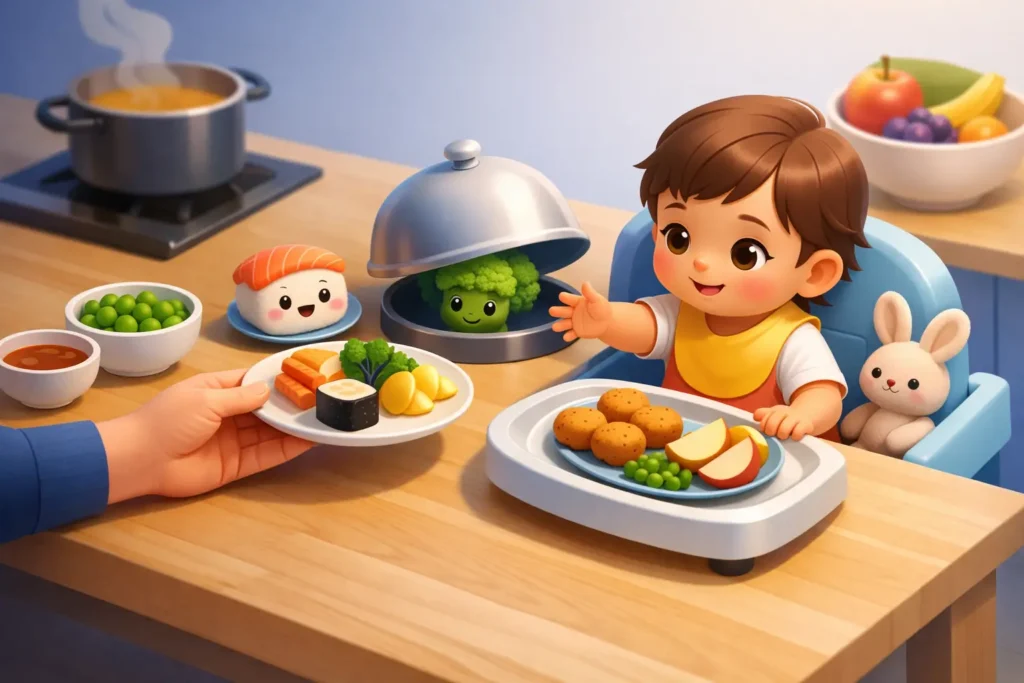
That untouched broccoli is not a parenting report card. Neither is the chicken your child suddenly refuses after eating it happily last week. When you introduce unfamiliar foods gently, you give your child room to feel safe before they feel adventurous – and you give yourself a way out of the nightly negotiation loop.
For many young kids, a new food is not just a new taste. It can be a new smell, texture, color, temperature, or shape sitting much too close to the foods they trust. The goal is not to convince your child to clear the plate. It is to make trying feel possible, one small, cheerful step at a time.
Start with a tiny, no-pressure hello
A full serving of something unfamiliar can feel huge to a child. Start with a piece the size of a pea, a single noodle, or one small floret. Put it beside a food they already enjoy, rather than replacing their whole meal with a challenge.
Then take the spotlight off it. You can say, “This is roasted sweet potato. It’s here if you want to investigate it.” That language matters. It communicates that the food is welcome, but your child is not being tested.
Your child may ignore it. That still counts as exposure. They may look at it, push it around, smell it, or ask a question. Those are early steps toward comfort, not wasted effort.
Make unfamiliar foods feel familiar
New foods land more easily when something about them feels recognizable. Serve a new dip with crackers your child likes. Add one new vegetable next to favorite pasta. Offer mango in the same bowl you usually use for berries.
You can also connect foods through shape, color, or crunch. If your child likes carrot sticks, thin cucumber sticks may feel less mysterious. If they enjoy crispy potatoes, roasted chickpeas might be a reasonable next experiment. This is not about hiding foods or tricking kids into eating them. It is about building a bridge from “I know this” to “Maybe I can try that.”
Preparation can make a real difference, too. Some children prefer vegetables raw and crunchy; others are more open to soft, roasted bites. A child who rejects plain yogurt may enjoy it with fruit, while another wants every ingredient separate. It depends on the child, and changing the presentation is not giving up. It is useful information.
Let curiosity come before a bite
Tasting is only one way to interact with food. Before asking for a bite, invite your child to be curious. What does it smell like? Is it smooth or bumpy? Does it make a crunch when you break it? Could it be a tiny dinosaur tree, a moon rock, or a green superhero snack?
Play lowers the stakes. A child who would never agree to “eat one bite of cauliflower” may be delighted to give the cauliflower a silly name or touch it with a fork. That little moment of engagement helps the food become less foreign.
Try to keep your own reaction calm and casual. If they touch the food and then wipe their hand dramatically on a napkin, resist the urge to turn it into a lesson. A simple “You checked it out” is enough. Kids notice when every interaction becomes a big deal, even when the attention is positive.
Use simple choices, not negotiations
Children need some control at the table. They do not need to run the menu. Small choices let them participate without putting the whole meal up for debate.
Ask, “Would you like the new food on your plate or in a little side bowl?” Or, “Do you want to smell it first or poke it with your fork?” You are offering a choice about how they engage, not whether the family has to make a separate dinner.
Avoid bargaining language like, “Just three bites and then you can have dessert.” It can make the new food feel like a chore and dessert feel like the real prize. Pressure can also backfire with children who are already wary of meals. A child may take the bite, but become even more determined not to try it next time.
A better approach is to celebrate willingness. “You were brave enough to put it on your tongue.” “You tried a new crunch.” “You decided you were done, and you told me.” These comments keep the focus on confidence and communication, not on performing for approval.
Introduce unfamiliar foods gently through play
For a child who freezes at the words “try it,” dinner needs a different energy. Make the next bite part of a game, not a showdown. A playful goal can shift attention away from the food’s unfamiliar texture and toward something your child genuinely wants to do.
Easy Eaters turns bites into a simple table-time game, with visual reveals, badges, and little celebrations that give kids a reason to participate. The reward is not a cookie or a separate prize after dinner. It is the fun of making progress right there at the table.
That distinction matters. A playful prompt works best when it supports the child’s own sense of accomplishment. “You helped reveal the picture!” lands differently than “You finally did what I told you.” One builds momentum. The other can make a sensitive eater feel watched.
Keep the goal small enough to win. For one child, a win may be a lick. For another, it may be one tiny bite of a food they have seen many times but never tasted. Success does not need to look the same at every meal.
Expect repeats, pauses, and changing opinions
Kids often need to see a food many times before they are ready to taste it. And even after a successful taste, they may reject it again. That can be frustrating, especially when you spent time and money preparing it, but it is a very normal part of learning to eat.
Think of food acceptance as a wiggly line, not a straight path. Your child might love strawberries for two weeks, reject them for a month, then ask for them again. They may eat roasted zucchini but refuse sautéed zucchini. They may enjoy a food at preschool and reject it at home because the setting, routine, or cooking style is different.
Keep offering without keeping score out loud. If a food comes back untouched, serve it another day in a smaller portion or a different form. If it has caused several tense meals in a row, take a short break. Gentle persistence is helpful. Repeated conflict is not.
Protect the mood of the meal
The best strategy can struggle in a tense room. If every meal begins with reminders, warnings, or worried faces, children may associate the table with pressure before the food even arrives.
Aim for a predictable rhythm: sit together when you can, offer at least one familiar food, and keep conversation about more than eating. Tell a funny story. Ask about the best part of the day. Let your child see you eat the unfamiliar food without making it a demonstration they have to copy.
You are still the parent, and you can set clear boundaries around respectful behavior. But you do not have to force a bite to lead the meal. Your job is to offer, guide, and keep the atmosphere steady. Your child’s job is to decide whether and how much to eat from what is offered.
When gentle steps need extra support
Picky eating is common, but some signs deserve a conversation with your child’s pediatrician or a qualified feeding professional. Ask for support if your child is losing weight, has trouble chewing or swallowing, coughs or gags frequently with food, eats an extremely limited range of foods, or becomes intensely distressed around meals.
Getting help is not overreacting. It can give you clarity and a plan that fits your child’s needs. For everyday pickiness, though, small exposures, playful encouragement, and less pressure can change the feeling at your table over time.
Tonight, choose one familiar meal and add one tiny new thing beside it. No speeches. No bribes. Just an invitation to look, touch, sniff, play, or taste. A peaceful meal is progress, and so is every little bit of curiosity that happens along the way.