

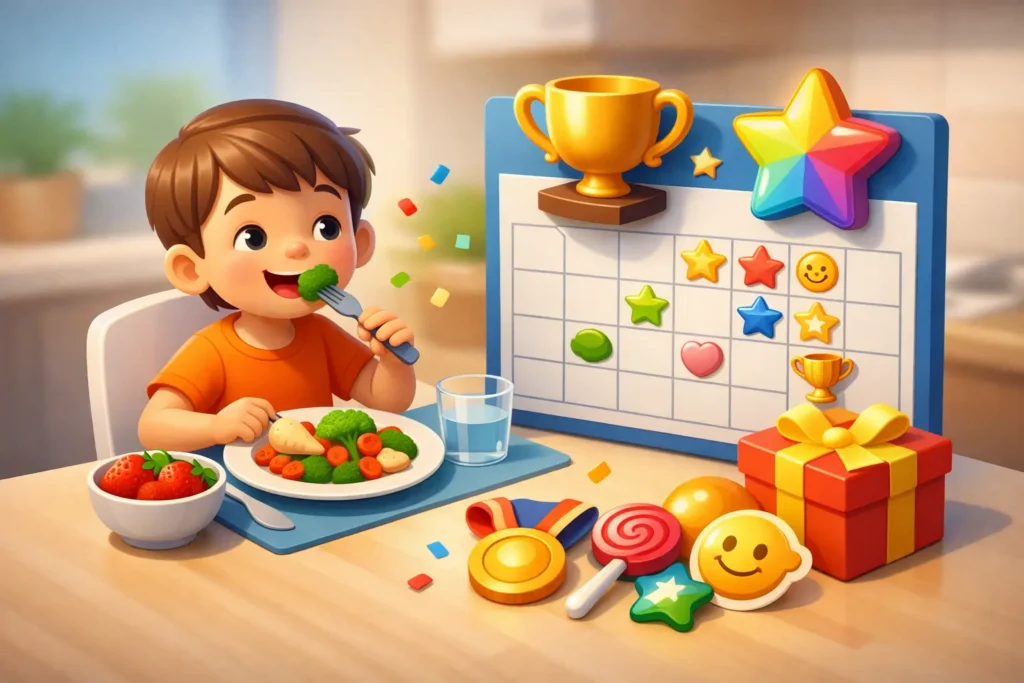
The broccoli is untouched. Your child is bargaining for crackers. You can already feel another long dinner conversation starting – and you are tired before it even begins. Visual rewards for kids eating offer a gentler way to shift that moment: not by demanding a clean plate, but by making one small bite feel interesting, achievable, and worth celebrating.
For many young children, the biggest hurdle is not hunger. It is the uncertainty of a new texture, smell, or color on the plate. A playful visual goal gives them something friendly to focus on while they practice trying food at their own pace. The result can be less pressure at the table, more cooperation, and a little more room for everyone to breathe.
Why visual rewards work at the table
Young kids respond to what they can see. A verbal promise like “just try one bite” can feel abstract, especially when that bite is a food they are unsure about. A picture slowly appearing, a progress bar filling up, or a cheerful badge earned after a few bites turns the goal into something concrete.
That small bit of visible progress matters. It gives a child a sense of control in a situation that can otherwise feel like adults are making all the decisions. Instead of hearing repeated reminders about the food, they can watch their effort create a result.
Visual rewards also make the win immediate. Children ages 2 to 8 are not usually motivated by the idea that vegetables are good for them someday. They are motivated by what happens right now: a favorite animal revealed, a colorful scene completed, a little celebration on screen. That is not a trick. It is simply meeting children where their attention already is – in play, pictures, and small moments of achievement.
Visual rewards for kids eating are not the same as bribery
Parents often worry that a reward will become another negotiation: “Eat three peas and you can have dessert.” That concern makes sense. Food-based rewards and high-stakes deals can make mealtimes feel even more loaded, and they can teach kids to view the food on their plate as an obstacle.
A visual reward works differently when it is tied to participation, curiosity, and bite-sized progress rather than perfection. The food is not a punishment to get through before a better food arrives. The reward is a playful response to trying.
The difference is in the tone. There is no need to say, “You have to finish.” Try language such as, “Want to see what happens after your next brave bite?” or “You get to choose when you are ready to add to your picture.” That keeps the child’s autonomy intact while making the experience more inviting.
It also helps to keep expectations realistic. A child who touches a new food, smells it, licks it, or takes a tiny taste may be making meaningful progress. Some meals will bring more bites than others. The goal is to build familiarity without turning dinner into a test.
What makes a mealtime reward feel motivating
The most useful visual rewards are simple enough to understand at a glance. If a child needs a long explanation before they can play, it is probably too complicated for a busy dinner table.
A good reward system usually has three qualities. First, it gives quick feedback. One bite or one small step should lead to a visible change, not a distant promise. Second, it feels positive rather than corrective. Bright pictures, silly characters, and tiny celebrations do more for the mood than charts that highlight what a child has not done. Third, it ends without creating a battle. When the game is over, the meal can stay calm whether or not every food was eaten.
Variety helps, too. The same sticker chart may work for a week and then lose its sparkle. New images, surprise reveals, and different badges keep the moment fresh without requiring parents to invent a new system every night.
Keep the goal small enough to win
A plate full of unfamiliar foods can feel enormous to a picky eater. Asking for a complete serving can make the child shut down before they have even started. Small goals lower the emotional temperature.
Start with a food your child can tolerate being near, alongside at least one familiar food. Then make the action manageable. For one child, a goal might be a tiny bite of chicken. For another, it might be putting a carrot on their tongue and deciding they are done. Progress is not always linear, and that is okay.
This approach works especially well when you avoid making a big announcement. Place the food on the table, set up the visual game, and offer an invitation. If your child says no, stay neutral. You can say, “That is okay. The game will be here if you change your mind.” A calm response protects the trust you are trying to build.
Make the game part of dinner, not the whole dinner
Visual motivation should support connection, not replace it. You still get to talk about your day, laugh at something silly, and let your child notice the food without being watched closely. The game is a helpful nudge, not a spotlight on every bite.
It is also wise to use it for a defined part of the meal. A few minutes of playful progress can be plenty. If your child becomes overstimulated by screens or gets upset when the game ends, shorten the session or use visual options away from a device, such as a simple picture card or a paper reveal.
Every child is different. Some children love a countdown and a clear finish line. Others respond better to a surprise image that appears gradually. If your child is very anxious around food, begin with zero pressure and celebrate interaction rather than consumption. The best system is the one that makes your child feel safer, not more managed.
A calmer script for parents
The words around the reward matter as much as the reward itself. Try to keep your voice warm and matter-of-fact. Instead of praising a child as “good” for eating, describe what happened: “You tried something new,” “You listened to your body,” or “You were curious about that crunchy pepper.”
This avoids attaching worth to how much your child eats. It also gives them language for the skills they are practicing: bravery, curiosity, and noticing what they like.
When they are not ready, resist the urge to persuade. You might say, “You do not have to eat it right now,” then continue enjoying your own meal. That can feel surprisingly hard when you have prepared dinner and want it to go well. But the less the table becomes a place for convincing, the easier it is for kids to approach food on their own terms.
A playful option for busy evenings
Parents should not have to create a fresh reward chart, find stickers, and negotiate the rules after a long day. Easy Eaters turns bite-based progress into a simple mealtime game, using image reveals, badges, and cheerful celebrations to help children stay engaged one small bite at a time.
The value is not in chasing a perfect meal. It is in creating a repeatable routine that feels lighter. Your child sees a fun next step. You have something encouraging to offer besides another reminder. Over time, those calmer repetitions can make trying food feel much less dramatic.
When to pause the rewards
If a child is crying, gagging, shutting down, or becoming more distressed, pause the game. No visual reward is worth pushing through a strong reaction. Mealtime support should feel safe, and some feeding challenges need more individualized guidance from a pediatrician or feeding professional.
You may also want to adjust the system if your child only eats while playing. Keep the visual activity brief, and occasionally offer it as an invitation rather than a requirement. The aim is for food confidence to grow, while the game remains a helpful tool in your back pocket.
A peaceful dinner does not require your child to love every food tonight. Sometimes success is one curious taste, one less argument, or one moment where you both leave the table feeling okay. Let the small wins count – they are often where happier eating begins.