

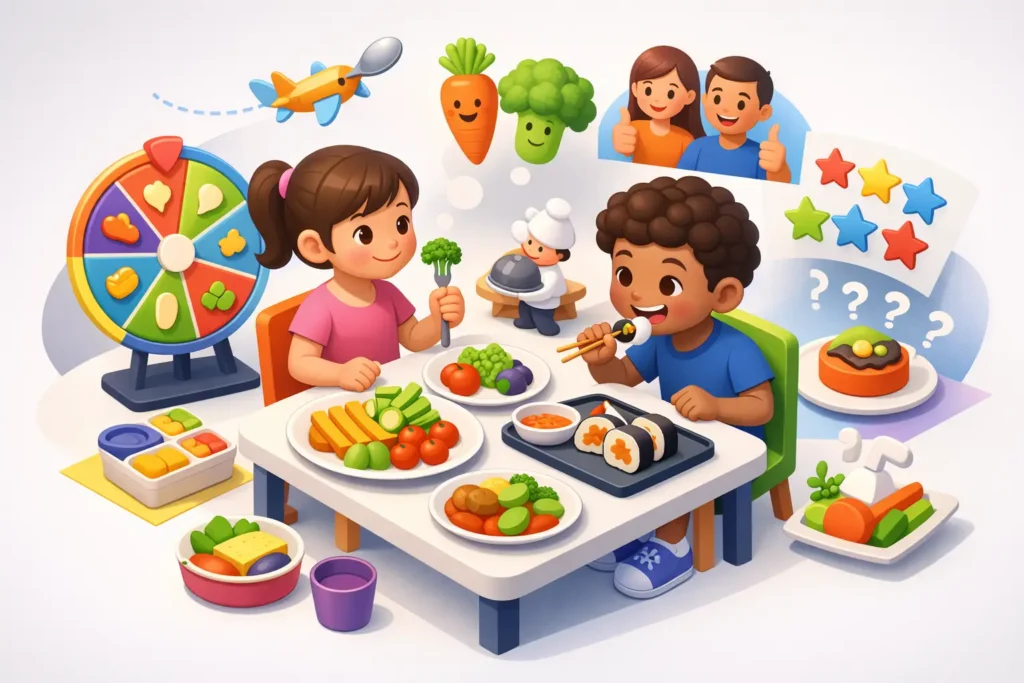
You put a new food on the plate, your child gives it one look, and suddenly dinner feels like a negotiation you never agreed to join. If you’re searching for ways to encourage kids to try new foods, you probably do not need another lecture about what a balanced meal should look like. You need realistic ideas that lower the stress, protect your relationship with your child, and help them take one small step forward.
That small step matters more than it seems. For many kids, especially ages 2 to 8, trying something unfamiliar can feel genuinely hard. Texture, smell, color, and even the way a food is placed on the plate can all play a role. The goal is not to create a child who suddenly loves every vegetable by Friday. The goal is to make new foods feel less scary and mealtimes feel less heavy.
Why kids resist new foods in the first place
Picky eating is not always stubbornness. Sometimes it is caution. Young kids are wired to prefer familiar things, and that includes food. A mushy texture, mixed ingredients, or a strong smell can be enough to make them shut down before they even consider a bite.
That is why pressure usually backfires. The more a child feels watched, pushed, or bribed, the more that new food starts to carry emotional weight. Instead of curiosity, they feel stress. Instead of confidence, they feel cornered.
10 ways to encourage kids to try new foods
1. Start with tiny goals
A full serving can look impossible to a child who already feels unsure. A lick, a sniff, or one tiny bite feels much more manageable. When the goal is small, resistance often gets smaller too.
This is one of the most effective ways to encourage kids to try new foods because it turns success into something they can actually reach. You are not asking them to love broccoli. You are asking them to be brave for one moment.
2. Keep new foods next to familiar favorites
A plate filled with only unfamiliar food can feel overwhelming fast. It helps to place one new item alongside foods your child already accepts. That way dinner still feels safe, even with something different in the mix.
This does not guarantee they will try the new food right away, and that is okay. Exposure still counts. Seeing it, smelling it, and having it near their regular meal can be part of the progress.
3. Take pressure off the bite
Kids can sense when the whole table is waiting for them to perform. Even gentle pressure like, “Just try it for me,” can feel bigger than intended. A more helpful approach is calm, matter-of-fact language.
You might say, “You do not have to eat it, but it is here if you want to explore it.” That simple shift protects trust. It lets your child stay in control of their body while still making room for curiosity.
4. Let play lead the moment
Play lowers defenses. That is true for learning, transitions, and yes, food. When trying a new food feels like a game instead of a test, kids are often more willing to participate.
This can be as simple as giving a food a silly name, making a taste test face chart, or celebrating a tiny bite like it was a major win. Some families find that turning bites into a visual challenge works especially well because it gives kids something fun to focus on besides their own hesitation. The key is that the game supports the meal, not distracts from it.
5. Offer the same new food more than once
A single refusal does not mean your child hates a food forever. Many children need repeated, low-pressure exposure before they feel ready to taste something new. That can be frustrating when you are already tired of wasted food, but repetition is often where progress happens.
It also helps to vary the presentation. Raw carrots and roasted carrots are not the same experience. Scrambled eggs on toast may go over differently than eggs alone. If one version fails, it may be the format, not the food.
6. Involve your child before mealtime
Kids are more likely to try something they helped choose, wash, stir, or plate. Involvement builds familiarity, and familiarity makes food feel less intimidating. Even very young children can help in simple ways.
You do not need a big cooking project for this to work. Let them pick between two vegetables at the store. Ask them to rinse strawberries or sprinkle cheese. Those small jobs create ownership, and ownership can lead to a first bite.
7. Watch your reactions
Parents are human. After the fifth rejection of the week, it is hard to stay cheerful. But visible frustration can make a child dig in even more, especially if they are sensitive or already anxious at meals.
Try to keep your response steady whether they eat the food or not. Big disappointment and big excitement can both add pressure. Warm encouragement works best when it feels calm and genuine.
8. Use routine to make trying feel normal
If new foods appear randomly, they can feel like a surprise challenge. If trying is built into your regular mealtime rhythm, it starts to feel expected in a comfortable way. Maybe your family has a “one food to explore” spot on the plate a few nights a week. Maybe Fridays are taste-test nights.
Routine helps because it removes some of the drama. Your child knows what is coming, and that predictability can make bravery easier.
9. Praise effort, not just eating
When a child touches a new food, smells it, or takes the tiniest nibble, that effort deserves attention. Not because you are trying to overhype dinner, but because courage grows when it gets noticed.
Try specific praise instead of general praise. “You were really brave trying that crunchy pepper” lands better than “Good job.” It tells your child exactly what went well and reinforces the behavior you want to see again.
10. Make progress visible
Kids respond beautifully to small wins they can see. Adults do too, honestly. When trying new foods feels invisible, motivation fades. When a child can watch their progress build bite by bite, it becomes easier to keep going.
That is one reason playful tracking can be such a relief for families stuck in dinner battles. Instead of arguing over one bite, you shift the energy toward progress, celebration, and momentum. Easy Eaters is built around that idea, helping kids reveal images, earn badges, and feel proud of each step without turning parents into negotiators.
What to avoid when encouraging new foods
Some common strategies work in the moment but create bigger problems later. Bribing with dessert can make the new food feel like a punishment and the treat feel even more powerful. Forcing a child to stay at the table until they eat often raises anxiety instead of appetite. Cooking a separate meal every night may reduce conflict temporarily, but it can also make it harder to expand their comfort zone over time.
That does not mean every family has to handle dinner the same way. Some kids need more support with sensory challenges. Some do better when foods are separated. Some need a break from a food before seeing it again. It depends on your child, their temperament, and what mealtime has felt like lately.
When progress feels painfully slow
This is the part many parents need to hear most: slow progress is still progress. A child who used to scream at the sight of a food but now lets it sit on their plate is moving forward. A child who touches a cucumber after ignoring it for weeks is moving forward too.
The hard part is that these wins can feel small when you are living them in real time. But small wins are how kids build trust with food. They are also how families rebuild peace at the table.
If mealtimes have become tense, start by picking one or two ideas from this list instead of trying all ten at once. Keep the goals gentle. Keep the tone light. And remember that every low-pressure bite, every playful moment, and every calmer dinner is helping your child get there.