

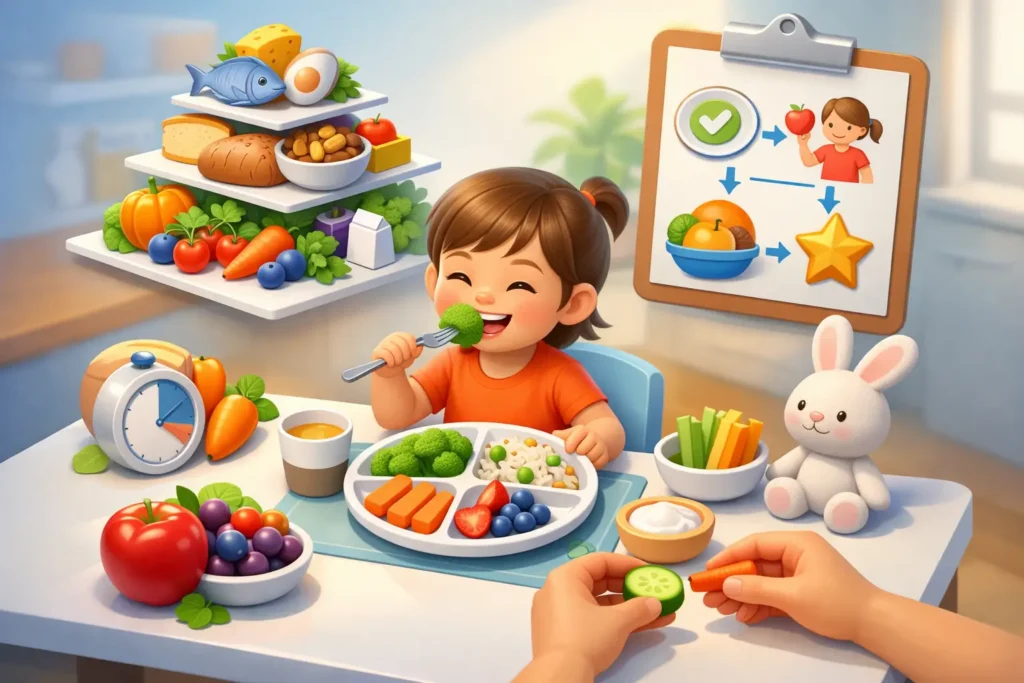
The broccoli is still on the plate. Your preschooler has asked for crackers for the third time. You are tired, they are tired, and somehow dinner has become a negotiation neither of you wanted.
Healthy eating habits for preschoolers do not begin with a perfect plate or a child who suddenly loves every vegetable. They begin with a calmer table, tiny opportunities to practice, and a little less pressure on everyone. When kids feel safe around food, curiosity has room to grow.
Why preschoolers push back at the table
Preschoolers are built to test independence. Food is one of the few places where they can say, “No,” and really mean it. Add a new texture, an unfamiliar smell, or a meal that looks different from yesterday’s favorite, and refusal can feel like the easiest answer.
That does not mean your child is being difficult or that you are doing anything wrong. Many preschoolers need to see, touch, smell, or have a food nearby several times before they are ready to taste it. Some days they will eat a full dinner. Other days, they may eat three bites and declare themselves done. Both can be normal parts of learning.
The goal is not to make your child clean the plate. It is to help food feel familiar, manageable, and never like a battle they have to win.
Healthy eating habits for preschoolers start small
Big changes tend to create big resistance. Small, repeatable routines are much more likely to last. Think less about getting your child to eat an entire serving of peas and more about what one peaceful interaction with peas could look like today.
Keep one familiar food on the plate
When every item is new or challenging, a preschooler may feel overwhelmed before the meal even starts. Include one food they usually accept alongside the rest of the family meal. It might be rice, fruit, bread, yogurt, or a simple protein they enjoy.
This is not “giving in.” It gives your child a safe place to begin while they get used to seeing other foods. A familiar food can make the whole plate feel less scary.
Serve tiny portions of new foods
A large scoop of an unfamiliar food can look like an impossible assignment. Start with a pea-sized portion, one carrot coin, or a single piece of chicken. Your child can always ask for more, which feels far more encouraging than facing a mountain they are expected to finish.
Tiny portions also reduce waste and lower the emotional stakes. If they leave it untouched, you have still practiced something valuable: seeing that food at the table without drama.
Let kids decide whether to eat
Parents set the menu, the timing, and the place to eat. Children can listen to their bodies and decide whether to eat what is served and how much. This balance protects your role as the caring guide without turning hunger and fullness into a power struggle.
You can offer food with confidence and stay neutral about the answer. Try, “The strawberries are here if you want some,” instead of, “Just take one bite for me.” The first leaves room for choice. The second can make a small bite feel like a test.
Make trying food feel playful, not pressured
Preschoolers learn through play. That same playful energy can make a meal feel lighter, especially when a child has a long history of refusing new foods.
Give foods simple, kid-friendly descriptions. Cauliflower can be “little clouds.” Bell pepper strips can be “crunchy rainbow sticks.” Let your child be the official food investigator who checks whether a cucumber is cool, bumpy, wet, or crunchy. Exploring counts, even when tasting does not happen yet.
You can also invite your child to help in small ways before dinner. They might rinse berries, stir pancake batter, tear lettuce, choose between two vegetables, or place napkins on the table. A child who helped prepare food is not guaranteed to eat it, but involvement can make unfamiliar foods feel less foreign.
What helps most is keeping the invitation gentle. If your child says no, avoid turning it into a lecture or a joke at their expense. A simple “Maybe next time” keeps the door open.
Use rewards carefully
It is understandable to reach for dessert, screen time, or a promised toy when dinner has been hard for weeks. The trouble is that these rewards can accidentally teach kids that vegetables are unpleasant work they must endure to get the good stuff.
Positive attention works differently. Celebrate bravery, participation, and curiosity without making food a performance. You might say, “You touched the avocado even though it was new,” or “You smelled it. That was a brave investigation.”
For families who need a little extra table-time motivation, a bite-based game can help shift the mood. Easy Eaters turns small bites into image reveals, badges, and cheerful surprises, giving children something fun to do while they practice trying food. The point is not to pressure more bites. It is to replace tense negotiations with a positive, predictable routine.
Build a rhythm kids can trust
Preschoolers often eat better when meals and snacks happen on a fairly reliable schedule. If they can graze all afternoon, they may simply not be hungry when dinner arrives. If they are ravenous and exhausted by 6 p.m., they may struggle to sit and cope with anything unfamiliar.
A practical rhythm usually includes regular meals and planned snacks, with water available between them. The exact schedule depends on your family, childcare routine, and child’s appetite. Consistency matters more than perfection.
Try to keep mealtimes reasonably short and relaxed. Twenty to thirty minutes is plenty for many preschoolers. Once your child is done, let them be done. Chasing them with one more bite around the kitchen rarely creates a happy relationship with food.
Screens can be another trade-off. A show may buy a few quiet minutes, but it can make it harder for children to notice hunger, fullness, flavors, and the social part of eating. If screens are already part of your routine, changing that overnight may cause more stress than it solves. Start with one screen-free meal or a few screen-free minutes, then build from there.
Talk about food without labeling it “good” or “bad”
Children hear everything. When foods are called bad, junky, naughty, or a guilty pleasure, kids can start to feel shame around eating. A more helpful approach is to talk about what foods do.
Carrots can help our eyes. Protein helps our muscles grow. Bread and pasta give us energy to play. Cookies taste sweet and can be part of life, too. This language makes room for balance without making any single food feel forbidden or magical.
It also helps to avoid using food as comfort, punishment, or proof of love whenever possible. “You were good, so you get ice cream” can make sweets feel more powerful than they need to be. Instead, offer treats as part of ordinary family life, without attaching them to behavior or bite counts.
Expect progress to look uneven
A preschooler may try a food at school and reject it at home. They may love roasted sweet potatoes for two weeks, then refuse them completely. They may eat only the bread at a family gathering and surprise you by tasting salmon the next day.
This is frustrating, but it is not failure. Food preferences are still developing, and appetite naturally changes with growth, sleep, activity, illness, and big emotions. Keep offering a variety of foods without forcing a result.
Watch the longer pattern instead of grading every meal. Is your child gradually comfortable having new foods nearby? Are meals less tense? Do they sometimes touch, lick, or taste something they once rejected? Those are real wins.
If your child regularly coughs, gags, has pain with eating, loses weight, eats an extremely limited range of foods, or you are worried about growth, check in with their pediatrician. Some feeding challenges need personalized support, and asking early is a caring step.
Tonight, choose one small thing to make easier: serve a tiny new food beside a favorite, describe it without pressure, or let your child earn a little joy for a brave bite. Peace at the table is not a prize you have to earn. It can be the place where healthier habits begin.