

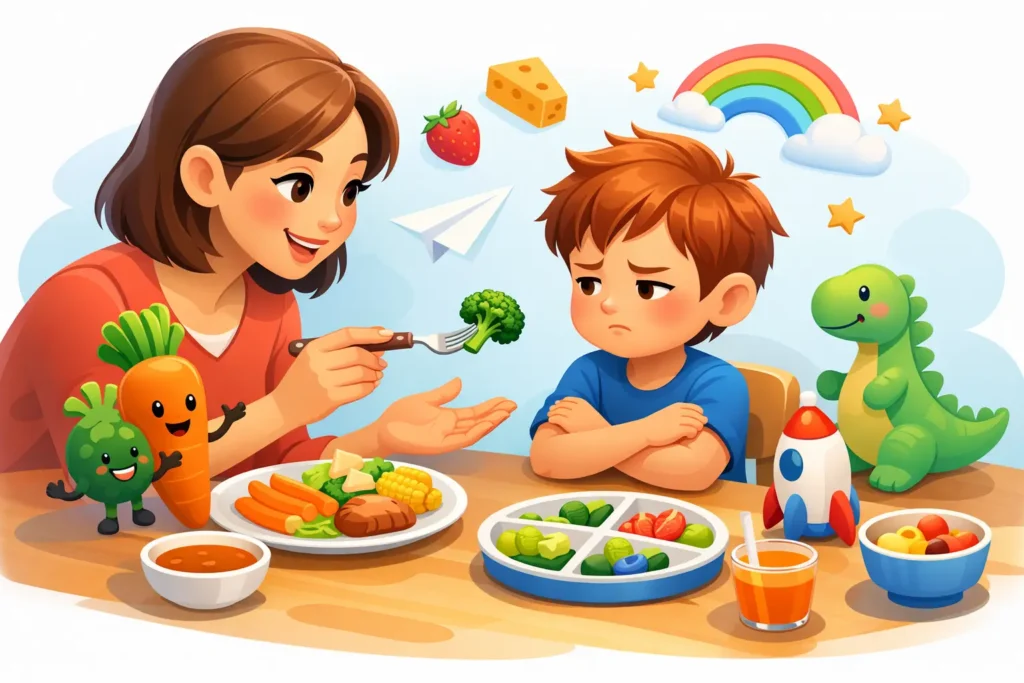
The green bean is sitting on the plate. Your child has already said “no” three times, dinner is getting cold, and you can feel yourself preparing for another negotiation. If you are wondering how to make kids taste food without begging, bribing, or turning every meal into a standoff, start here: the goal is not a clean plate. The goal is one small, safe-feeling step toward a food.
For a child who is wary of new flavors, a taste can feel like a very big ask. When parents lower the pressure and make that step playful, children are much more likely to join in. Tiny wins count. A lick counts. A nibble counts. Even touching or smelling a new food can be progress on a tough day.
How to Make Kids Taste Food: Start Smaller
“Take three bites” can sound simple to an adult, but it can feel like a demand to a child who is already unsure of what is on their plate. Instead of asking for a full serving or a certain number of bites right away, offer a tiny learning step.
You might say, “You do not have to eat it. Would you like to put it on your fork?” Or, “Want to smell the strawberry and tell me if it smells sweet or sour?” This gives your child some control while keeping the food nearby. It also tells them that trying is welcome, but forcing is not part of dinner.
A helpful progression can look like this: first, let the food sit on the plate. Next time, invite your child to touch it. Then they might smell it, kiss it, lick it, or take a crumb-sized bite. Some kids move through these steps quickly. Others need many relaxed encounters with the same food. Both are normal.
The key is to celebrate the attempt without making it feel like a performance. “You touched the chicken. That was brave!” lands much better than, “See? That was easy.” Your child gets to decide whether they are ready for the next step.
Make the Table Feel Less Like a Test
Children can spot a food test from across the room. If everyone is watching them take a bite, asking repeatedly, or offering a bigger reward for eating, the meal can become about pressure instead of hunger and curiosity.
Try serving one familiar food alongside the food you hope they will explore. A familiar item gives your child something comfortable to eat while the new or challenging food stays available. It may be toast with soup, rice with a stir-fry, or berries beside yogurt. You are not “giving in.” You are making the table feel safe enough to try.
Keep portions of unfamiliar foods genuinely small. A single broccoli floret is less overwhelming than a pile of broccoli, and it creates less waste if your child is not ready. You can always offer more. Seeing a large portion of a disliked food can make some children shut down before dinner begins.
Your own reaction matters, too. Eat the food yourself and describe it casually: “These carrots are crunchy.” Avoid speeches about vitamins, growing big, or how much time you spent cooking. Those statements come from a caring place, but they can add weight to an already tense moment.
Use Play to Create a Reason to Try
A child does not need to love every food to enjoy a little dinner fun. Play gives kids a reason to participate that is not based on pleasing an adult. The trick is to make the game about exploring, not about earning dessert or escaping the table.
Give foods a simple mission. Can they find the crunchiest cucumber? Which pasta shape can hold the most sauce? Is the red pepper sweeter than the yellow pepper? Let them be the food detective, the official taste tester, or the chef’s helper. These small roles turn attention away from refusal and toward discovery.
Visual games can be especially motivating for young children. A surprise picture that reveals itself one tiny bite at a time gives a child something immediate to work toward. Easy Eaters uses that kind of bite-by-bite play, with image reveals, badges, and cheerful celebrations that make progress feel exciting instead of stressful.
The game should always stay light. If your child says they are done, let the game pause. A playful tool works best when it is an invitation, not another rule. The win is that your child had a positive interaction with food, even if the meal did not end with an empty plate.
Give Choices Without Becoming a Short-Order Cook
Choice can reduce power struggles, but unlimited choice creates a different kind of stress. You do not need to make four dinners or ask an open-ended question like, “What do you want to eat?” at 5:45 p.m.
Offer two options you are comfortable serving. “Do you want peas or corn with your chicken?” “Would you like your apple in slices or little cubes?” “Should we put the dip on the plate or in a small bowl?” These choices let your child have a voice while you remain in charge of what is available.
It also helps to involve children before the meal. A preschooler can rinse berries, stir pancake batter, or carry napkins to the table. An older child can choose a vegetable at the store or sprinkle cheese over tacos. Kids are often more willing to taste food they helped prepare, although there is no guarantee. Think of it as another friendly exposure, not a promise.
Repeat Foods Calmly, Even After a No
One “yuck” does not mean a food is permanently off limits. Taste preferences change as children grow, and a child may need to see a food many times before tasting it. The goal is steady exposure without a lecture.
Bring the food back in a slightly different form when it makes sense. Roasted sweet potatoes may be more appealing than mashed ones. A child who rejects plain yogurt may be curious about it as a dip for fruit. Serving the same food in a familiar meal can also help, such as adding a few beans beside a taco rather than presenting a brand-new bowl of beans.
That said, repeating a food does not mean pushing it every night. If your child becomes upset just seeing a particular food, give everyone a break and return to it later. A calm table protects long-term progress better than winning one difficult bite.
Keep Your Words Simple When Kids Refuse
What you say after a refusal can either close the door or leave it open for tomorrow. Try a calm response: “You do not have to eat it today. It will be here if you change your mind.” Then shift the conversation to something else.
Avoid turning refusal into a debate. “Just try it,” “You liked it last time,” and “One bite will not hurt you” may be true, but repetition can make a child dig in harder. The less attention food refusal receives, the less power it has at the table.
Praise effort specifically when it happens. Instead of a big celebration that might embarrass your child, try, “You took a tiny taste of the fish. You were curious.” This helps them connect trying with confidence, not with parental approval alone.
Know When to Get Extra Support
Picky eating is common, especially in the toddler and preschool years. But some situations deserve a conversation with your child’s pediatrician or a qualified feeding professional. Ask for guidance if your child routinely coughs, gags, or chokes while eating; has trouble chewing or swallowing; avoids entire food textures; loses weight; has very limited accepted foods; or feels intensely anxious around meals.
Support is not a sign that you have done something wrong. It is simply another way to help your child feel safe, nourished, and confident.
Tonight, choose one food, make the portion tiny, and take the pressure off. Put curiosity on the menu. A peaceful “maybe next time” can be the beginning of a child who feels ready to try tomorrow.