

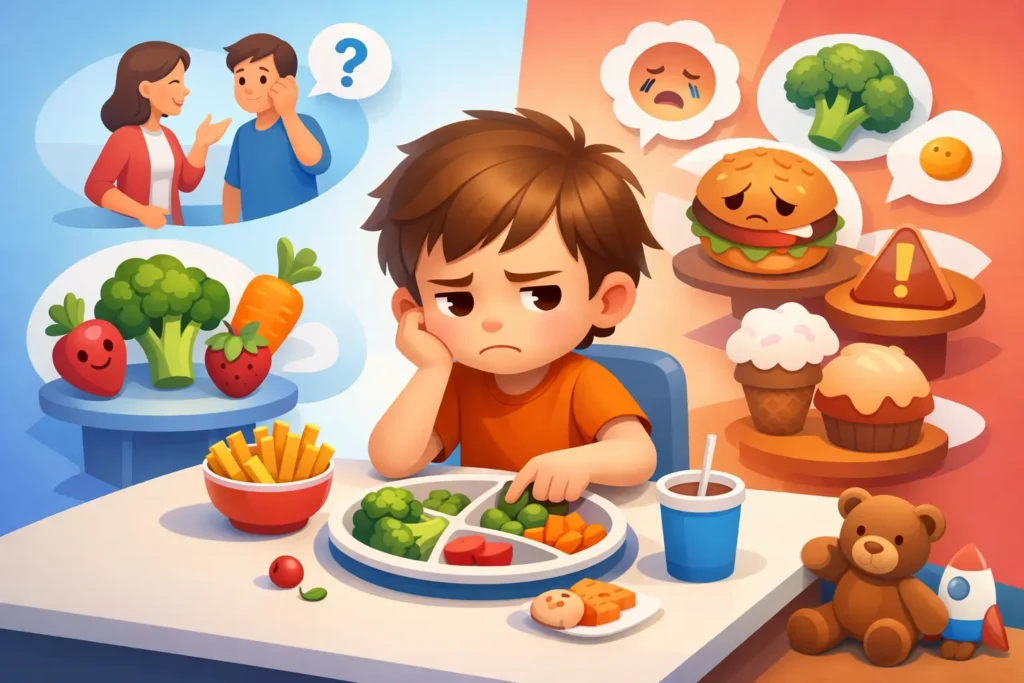
A plate of buttered pasta gets a happy yes. The same pasta with a tiny green fleck gets pushed away like it is a personal insult. If you have ever wondered, why is my child picky, you are not alone – and you are not failing.
Picky eating can make dinner feel much bigger than dinner. It can bring worry about nutrition, frustration over wasted groceries, and that familiar dread before you even call everyone to the table. The reassuring truth is that picky eating is very common in young children, especially between ages 2 and 8. It is usually a phase shaped by development, temperament, routine, and a child’s need to feel safe and in control.
That does not make it easy. But it does mean there are gentle ways forward that do not require pressure, threats, or a second round of cooking every night.
Why Is My Child Picky? It Is Often Developmental
Toddlers and young children are built to be cautious about unfamiliar food. As children become more mobile and independent, many go through a stage called food neophobia – a strong hesitation around new foods. From a developmental standpoint, this caution made sense. For a small child, unfamiliar things can feel risky.
Your child is also learning that they have a voice. Food is one of the few places where a little kid can feel a lot of control. They may not get to choose when they leave the house, take a bath, or buckle into a car seat. At dinner, saying “no” can feel powerful.
This is why a battle over one pea rarely ends with more peas eaten. The more intense the moment becomes, the more your child may dig in to protect that small sense of control.
Their Senses May Be Saying No Before They Take a Bite
Adults often think of food as flavor first. Kids can experience it as texture, smell, temperature, color, and appearance all at once. A child who happily eats crunchy carrots may refuse cooked carrots because their soft texture feels completely different. A sauce touching a favorite food can be enough to make the whole plate feel wrong.
Sensory preferences are real, and they are not always stubbornness. Some children are especially sensitive to mixed textures, strong smells, or foods that look unpredictable. Think yogurt with fruit chunks, casseroles, soups, or anything with a “mystery” sauce.
You do not need to hide vegetables or insist that a child ignores their discomfort. Instead, offer a food in a form that feels more manageable. Serve ingredients separately. Keep a familiar dip nearby. Let a new food sit on the plate without requiring a bite. Seeing and touching food are meaningful early steps, too.
Hunger, Tiredness, and Big Feelings Affect Appetite
A child who barely touched lunch may seem hungry after school, then refuse dinner an hour later. That can be confusing, but young children do not eat with adult consistency. Their appetite can change from one day to the next, and growth naturally happens in spurts.
Snacks, milk, juice, and grazing can also quietly fill a small stomach before dinner arrives. That does not mean snacks are bad. It simply helps to create a rhythm: regular meals and snacks, with enough time between them for hunger to show up.
Mood matters, too. A child who is overtired, overstimulated, worried about preschool, or upset because playtime ended may not have much energy left for a new food challenge. Sometimes the best mealtime strategy is not a clever recipe. It is a calmer table, a predictable routine, and lower expectations for that one evening.
Familiar Foods Feel Safe for a Reason
When a child asks for the same foods again and again, they are usually choosing certainty. They know what chicken nuggets will feel like. They know the crackers will taste the same. Familiar foods help them relax enough to eat.
Rather than treating favorite foods as the enemy, use them as a bridge. Serve one accepted food alongside the family meal. This is not “giving in.” It gives your child something safe to eat while keeping them near the foods they are still learning about.
Try a tiny, no-pressure portion of the less familiar food. A single broccoli floret, one spoonful of rice, or a few beans is plenty. Large portions can feel overwhelming before the meal even begins. Your job is to offer; your child’s job is to decide whether and how much to eat.
What Makes Picky Eating Harder?
Most parents have tried bargaining because they are tired and they want the meal to move along. “Just three bites.” “Eat this, then you can have dessert.” “Your sister eats it.” These phrases come from a loving place, but they can make food feel like a test.
Pressure can also teach children to pay less attention to their own hunger and fullness signals. Some kids respond by shutting down. Others learn to hold out for a preferred food. Neither reaction means you have caused a lasting problem. It simply means a reset may help.
Try to keep your language neutral. Instead of “You have to eat it,” you might say, “This is on your plate if you want to try it.” Instead of praising a clean plate, notice the effort: “You touched the cucumber today. That was brave.” The goal is curiosity, not perfection.
Make Trying Food Feel Smaller and More Playful
Children often need many low-pressure exposures before they accept a food. They may first tolerate it on the table, then on their plate, then touch it, smell it, lick it, and eventually take a bite. That is progress, even if it does not look dramatic.
A little play can help remove the heavy feeling from the moment. Invite your child to give foods silly names, sort foods by color, or be the “taste tester” who decides whether something is crunchy, squishy, sweet, or sour. Keep the game about exploring, not earning permission to leave the table.
Easy Eaters was created for these real-life moments. The app turns bites into a simple game, with visual reveals, badges, and little celebrations that give children something fun to focus on. Instead of a parent-child standoff, each small bite becomes a shared win. The food is still the food, but the feeling around it can change.
A Calmer Dinner Routine That Builds Trust
You do not need a perfect menu to create a better mealtime. Start by serving meals at a table when possible, without screens competing for attention. Include at least one familiar food. Let your child see the family eating the same meal without making them perform.
Keep dinner reasonably short. Twenty to thirty minutes is often enough for young children. If they are done, avoid chasing them around with bites or turning the rest of the evening into a negotiation. You can calmly end the meal and trust that another eating opportunity is coming.
It also helps to separate your worries from your child’s plate. Looking at one dinner in isolation can feel scary. Look at the whole week instead. Many children balance out their intake over several days, not at every single meal. If your child has energy, is growing as expected, and eats at least some foods from different groups over time, a narrow phase may be less alarming than it feels.
When to Ask for Extra Support
Some food refusal needs more than everyday picky-eating strategies. Talk with your child’s pediatrician if they are losing weight, not growing as expected, coughing or gagging often while eating, having pain with meals, or avoiding entire textures so intensely that eating is very limited.
It is also worth asking for guidance if meals cause extreme distress, your child eats fewer and fewer foods over time, or you suspect swallowing, digestive, oral-motor, or sensory challenges. A pediatrician can help you decide whether support from a feeding therapist, dietitian, occupational therapist, or another specialist makes sense.
Getting help is not overreacting. It is a way to make sure your child feels safe and supported around food.
Tonight, aim for one small win: a familiar food on the plate, a new food nearby, and a little less pressure in the room. Your child does not need to become an adventurous eater by Friday. They just need repeated chances to learn that mealtime can be safe, playful, and peaceful.