

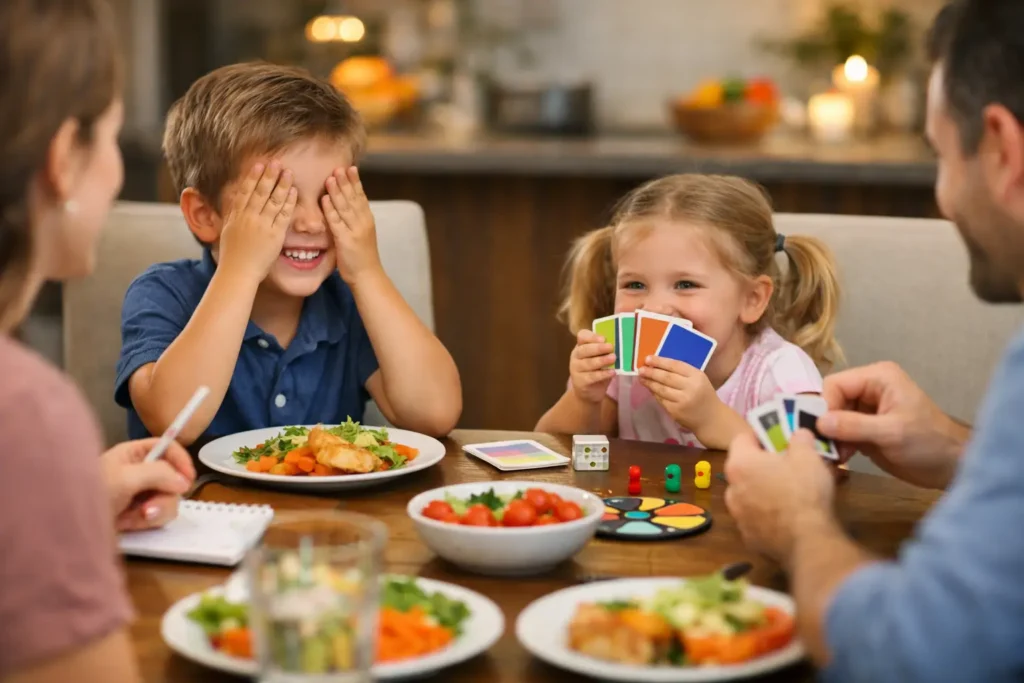
A preschooler who has declared broccoli “too green” may not need a lecture, a bargain, or a second dinner. They may need a reason to stay curious for one more bite. The best dinner games for preschoolers create that little spark of interest while keeping the table relaxed enough for everyone else to eat, too.
The goal is not to trick your child into cleaning their plate. It is to make room for practice. New foods can feel big to young children: unfamiliar color, texture, smell, and all. A playful game lowers the stakes, so a look, touch, lick, or tiny bite can count as a real win.
What makes a dinner game work for preschoolers?
A good dinner game is quick to explain, easy to pause, and focused on participation rather than performance. Preschoolers do best when they know what happens next and can feel successful early. If a game requires lots of rules, waiting, or competing with a sibling, it can create more frustration than fun.
Keep portions tiny. One pea, one shred of chicken, or one small square of sweet potato is plenty for a food-learning moment. Give your child a choice when you can: “Do you want to try the crunchy cucumber or the soft avocado first?” Choice gives them a little control without turning dinner into a negotiation.
Most importantly, let the game stay low-pressure. If your child says no, calmly move on. You can offer the food again another day. A peaceful table is more valuable than winning one bite tonight.
8 best dinner games for preschoolers
1. The color hunt
Ask everyone to find a food in a certain color. Start with an easy one: “Can you spot something orange on your plate?” Once your child identifies it, invite them to investigate it. Is it smooth or bumpy? Does it crunch or squish?
This game works especially well with meals that include a few colorful choices, such as peppers, berries, carrots, corn, peas, rice, or pasta. The point is not that they must eat every color. Looking, naming, and touching are all ways to build familiarity.
2. Tiny taste scientist
Turn your preschooler into the official dinner scientist. Before a taste, ask for a prediction: “Will the potato be sweet, salty, soft, or crunchy?” Afterward, ask what they noticed.
Use simple words and accept every honest answer. “Slimy” is not rude feedback. It is useful information. You can respond, “You noticed it felt slippery. That makes sense.” Feeling heard makes children more willing to explore again, even when they do not like a food yet.
3. The brave bite reveal
This is ideal for a child who loves surprises. Choose a fun picture, animal, or silly scene that can be revealed in small pieces. Each voluntary bite reveals another part of the image. The reward is not candy or a separate dessert – it is the excitement of seeing what is hiding underneath.
Easy Eaters brings this idea to the table with bite-by-bite picture reveals, badges, and cheerful celebrations. For parents tired of inventing a new game every night, it offers a simple way to make the next small try feel worth celebrating.
Keep the language light: “Want to reveal the next piece?” Avoid, “You have to take a bite.” The difference matters. An invitation preserves trust and gives your child room to choose.
4. Restaurant helper
Let your child play server, chef, or food critic for a few minutes. They can deliver napkins, choose where the carrot “special” goes, or ask each family member for a review of the meal.
Preschoolers often enjoy foods more when they have helped prepare or serve them. That does not mean they will suddenly eat everything they touched, and that is okay. The win is a positive connection with the food before it reaches their mouth.
If you are short on time, make the job tiny. They can sprinkle cheese, tear lettuce, stir a cold ingredient, or place sliced fruit in a bowl. A two-minute role can change the mood of the meal.
5. Food face challenge
Use a few meal items to create a silly face on the plate: cucumber eyes, a pasta smile, or a bean nose. Invite your child to name the character. Is it a sleepy monster? A pirate? A puppy who ate too many peas?
Then let the character “lose” one feature at a time as someone eats it. This game is best for foods that are already served in small, manageable pieces. It can get messy, so skip it on nights when you need dinner to be fast and simple.
6. Crunch, squish, snap
Some picky eating is really texture caution. This game gives children words for what their bodies are noticing. Take turns choosing a food and deciding whether it crunches, squishes, snaps, stretches, or melts.
You do not have to demand a bite to play. Your child can press the food with a fork, tap it, smell it, or watch you take a bite first. When they eventually taste it, they already know what to expect. That predictability can make a new texture feel less alarming.
7. The family taste vote
Pick one food everyone can rate with thumbs up, sideways, or down. Make it clear that a sideways or down vote is allowed. The fun comes from hearing different opinions, not from getting matching answers.
This game helps preschoolers see that taste is personal. Dad may love tomatoes. Big sister may not. Your child can dislike something without becoming “a picky eater” as an identity. Try saying, “You do not like it yet,” rather than labeling them.
Keep the vote to one food, especially if your child is already wary at dinner. Too many new foods at once can feel overwhelming. Pair the learning food with familiar foods your child usually accepts.
8. The silly story bite
Build a short story one bite at a time. You start: “Once upon a time, a tiny pea rolled away from the vegetable garden…” Your child adds the next sentence, then another family member continues.
A voluntary bite can earn the next story turn, but it does not have to. If tying bites to turns creates pressure for your child, simply tell the story while everyone eats. The real benefit is connection. When dinner feels safe and enjoyable, food exploration has more room to happen.
How to keep dinner games from becoming another battle
The best game can fall flat if it arrives when everyone is hungry, rushed, and overstimulated. On chaotic nights, choose just one tiny prompt, like “What color should we hunt for?” Save bigger games for when there is a little more breathing room.
Try not to use games as a way to sneak food past your child’s awareness. Preschoolers notice more than we think, and trust matters. Be honest about what is on the plate. The game should make trying feel playful, not make your child feel tricked.
It also helps to separate exposure from expectation. Put a small serving of a less familiar food beside foods your child knows. Let them decide how far they want to go today. Looking at roasted zucchini might be the step before touching it. Touching it might come before tasting it next week.
Celebrate effort in a specific way. Instead of “Good job eating,” try, “You touched the pepper even though it was new,” or “You gave that crunchy bite a try.” This teaches children that courage and curiosity count, whether or not they finish the food.
Small wins can change the whole table
You do not need a perfect meal plan or a magical recipe to make dinner feel better. Start with one game, one tiny portion, and one low-pressure invitation. Some nights your preschooler will play but not taste. Other nights, they may surprise you with a bite you were not expecting.
That is how calmer eating habits grow: not through force, but through many ordinary moments where your child learns that food can be interesting, safe, and even a little fun.