

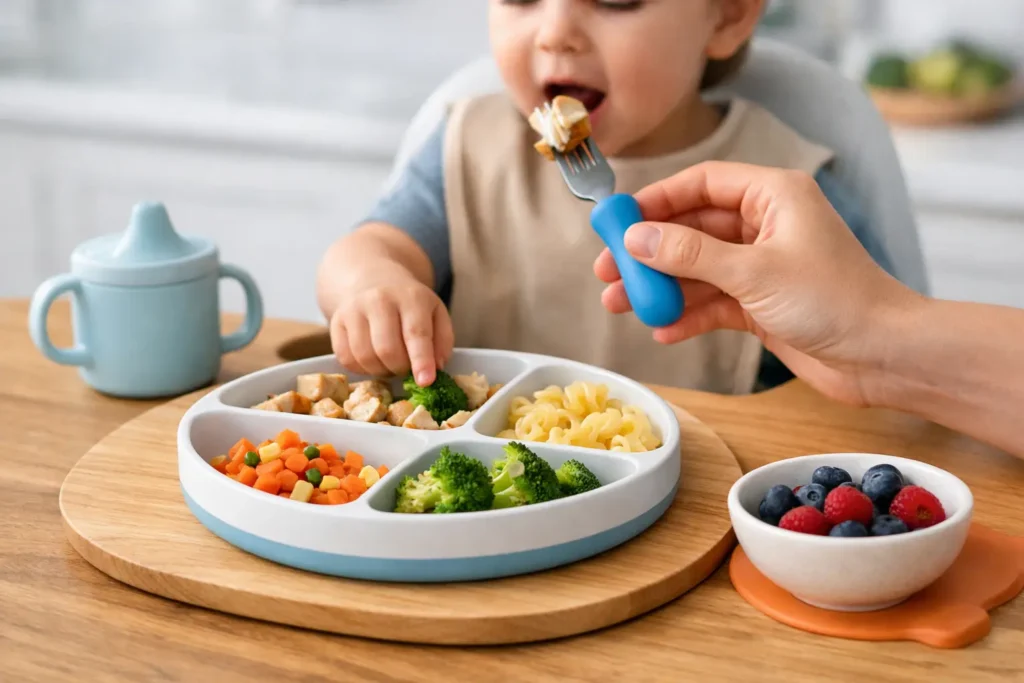
A child stares at the broccoli, pushes the plate away, and suddenly dinner feels like a negotiation nobody wants to win. Bite goal design offers a different starting point: instead of asking a child to finish a food, invite them to make a small, visible bit of progress.
That shift matters. For a picky eater, a full serving can feel enormous, unfamiliar, or simply too demanding after a long day. A bite goal turns the moment into something manageable. One bite can become a picture reveal, a happy sound, a badge, or a tiny celebration. The food is still there, but the pressure is not.
What Bite Goal Design Really Means
Bite goal design is the way a mealtime game sets, shows, and celebrates a child’s progress as they take bites. The best design makes the next step feel possible without making food feel like a test.
This is not about tricking children into eating foods they hate. It is not a race to clear the plate, either. It is about creating a positive reason to engage with food while giving children a sense of control. A child who says, “I can do one more bite to see the next picture,” is participating in a very different mealtime than a child who hears, “You cannot leave until you finish.”
For parents, that difference can bring real relief. You do not have to become the referee, the negotiator, or the person counting every pea. The goal creates a simple structure, and the game carries some of the emotional weight.
Start Small Enough to Feel Safe
The most effective bite goal is often smaller than parents expect. If your child usually refuses a new food completely, asking for five bites may be too big a leap. One tiny taste, one lick, or one bite can be a meaningful win.
Start with what your child can realistically do while staying calm. That might mean two bites of a familiar food alongside one tiny bite of something new. It might mean setting a goal for a food they already like at first, simply to help them understand the game and feel successful.
The point is not to lower expectations forever. The point is to build a pattern of success. When children repeatedly experience, “I tried it, I did it, and nothing scary happened,” they are more likely to approach the next meal with less resistance.
A good rule is to make the goal challenging enough to feel exciting but easy enough that success is likely. If nearly every meal ends in frustration, the target is probably too high. If your child reaches it without noticing, you can gently add another bite later.
Match the Goal to the Moment
There is no perfect number of bites for every child or every dinner. Appetite, tiredness, illness, sensory sensitivities, and the food itself all matter.
A crunchy raw carrot may take more courage than a soft pasta shape. A child may happily eat three bites at lunch and manage only one at dinner. That does not mean the plan failed. It means you are responding to a real child, not trying to force a perfect streak.
Keep goals lower on busy nights, during travel, or when a new food is on the plate. Save slightly bigger challenges for calm meals when your child is rested and open to playing. Flexibility protects the feeling you want to build: mealtime is a place where they can try.
Make Progress Easy to See
Young children understand what they can see. A spoken promise like, “Just two more bites,” may not mean much when they are focused on the food in front of them. A visual progress bar, a covered picture that reveals piece by piece, or a simple row of stars gives each bite a clear purpose.
This is where the game becomes more than a distraction. Visual progress helps children connect action and outcome. They take a bite, something changes, and they know they moved forward. That immediate feedback is especially helpful for kids ages 2 to 8, who may not be motivated by a distant reward later in the week.
The reveal should feel fun, not overwhelming. Bright images, friendly characters, and short celebrations work well because they mark the moment without pulling the child away from the table for too long. The food stays central. The game simply gives the experience a lighter emotional tone.
Avoid progress systems that make children feel behind. If a child misses a goal, there should be no sad buzzer, lost streak, or message that suggests they disappointed anyone. Progress can pause and start again tomorrow. The message is always: you are welcome to try again.
Celebrate Trying, Not Cleaning the Plate
One of the biggest design choices is what counts as success. When the reward only appears after a child finishes everything, the game can accidentally become another version of plate pressure. That can backfire, especially with selective eaters.
Instead, celebrate the behaviors you want to see more often: sitting with the family, touching a new food, smelling it, taking a taste, or trying another bite. The exact step depends on your child and their comfort level.
If your child takes one bite of chicken and then says they are done, you can calmly say, “You gave it a try. Nice job getting your picture piece.” You do not need to turn that moment into a debate about whether one bite was enough. The positive experience is the practice.
Over time, many children naturally become more comfortable with foods they see and try repeatedly. But the pace varies. Your job is to offer the opportunity and keep the atmosphere steady. Their job is to listen to their body and decide how much to eat.
Keep the Game at the Table, Not Over the Meal
A bite game should support family dinner, not take it over. If children become so focused on tapping buttons that they stop noticing their food or conversation, simplify the experience.
A helpful rhythm is bite, reveal, celebrate, then return to the meal. Keep each interaction brief. You can talk about the image, ask what they think might be hidden next, or simply enjoy the little burst of excitement together.
It also helps to set the tone before food arrives. Try a simple script: “Tonight we are playing for three picture pieces. You can earn one when you take a bite. We are just practicing and having fun.” That wording tells your child what to expect without making dinner feel like a performance.
If they say no, stay neutral. “Okay, the game will be here if you change your mind.” Then continue with your meal. Chasing, pleading, or repeatedly reminding them can bring the pressure right back.
Use Bite Goals Without Bribery
Parents often worry that rewards will teach children to eat only when there is a prize. That concern makes sense, and the details matter.
A bite-based game works differently from saying, “Eat your vegetables and you can have dessert.” Dessert can turn into the valuable prize while vegetables become the unpleasant obstacle. A small in-the-moment reveal or celebration, however, makes trying feel playful without putting one food above another.
Keep the reward connected to the act of participation, not to eating a certain amount of a specific food. Let it be a cheerful cue, not a bargaining chip. You can still serve dessert as part of the family meal when it fits your routine, rather than using it as leverage.
Easy Eaters is built around this idea: children make progress one bite at a time, while parents get a simple way to keep the energy positive.
When a Bite Goal Is Not the Right Tool
Bite goals are helpful for many ordinary picky-eating moments, but they are not a cure-all. If your child coughs, gags frequently, has trouble chewing or swallowing, loses weight, avoids whole categories of food, or experiences intense distress around eating, talk with their pediatrician or a qualified feeding professional.
Even without those concerns, some nights are not game nights. A sick child, an overtired child, or a family rushing out the door may need a familiar meal and a little extra calm. You are allowed to skip the goal. Consistency is helpful, but compassion matters more than a perfect routine.
The real win is not a spotless plate or an unbroken streak. It is the moment your child looks at a food that once caused a battle and feels curious enough to take one small bite. Let that be enough for tonight.