

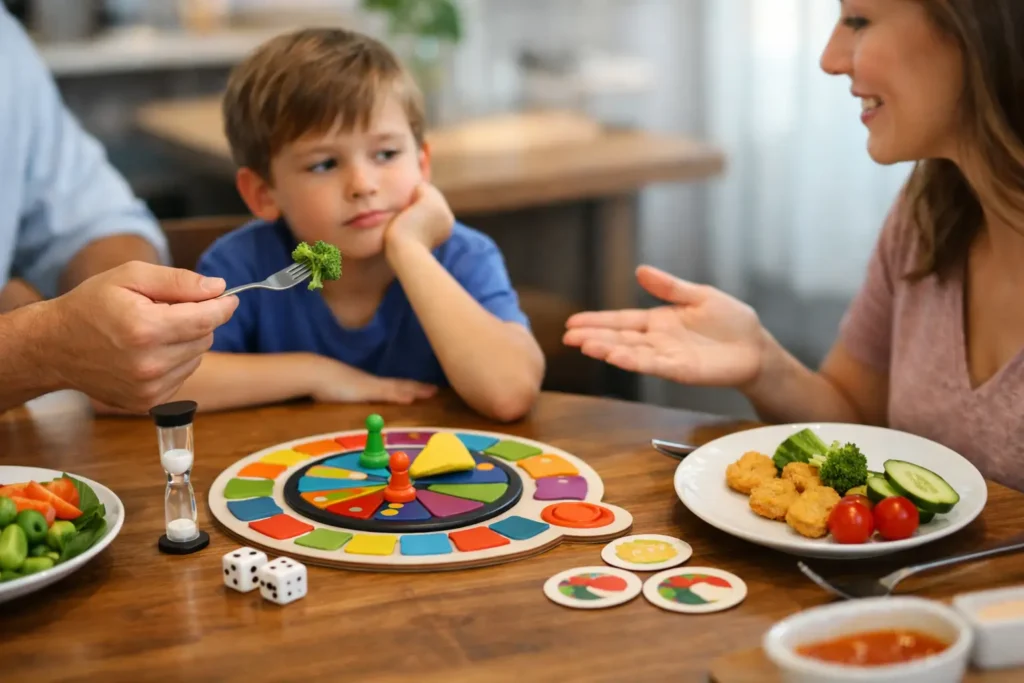
The dinner plate is still on the table. Your child has taken one look at the broccoli, declared it “yucky,” and somehow the whole evening is now about one tiny green floret. If that scene feels familiar, this interactive dinner game review is for you. We looked at what happens when mealtime motivation shifts away from bargaining, pressure, and “just one more bite” toward a small, playful challenge kids can actually enjoy.
For families with picky eaters, a dinner game is not about tricking a child into eating everything. At its best, it gives children a reason to participate while giving parents a calmer way to respond. That distinction matters. The goal is less tension at the table, more opportunities to try, and plenty of room for progress to happen one bite at a time.
What an Interactive Dinner Game Is Really Testing
An interactive dinner game turns the act of taking bites into play. A child takes a bite, sees progress on a screen, reveals part of an image, earns a badge, or watches a cheerful animation. The meal becomes a simple mission with a visible finish line.
That sounds small, but it addresses a very real mealtime problem: picky eating often comes with a lot of big feelings. A new food can feel unfamiliar. A parent’s request can feel like a demand. The more everyone focuses on the food refusal, the more stressful the moment can become.
A good game changes the conversation. Instead of, “You need to eat your carrots,” it becomes, “Want to see what the next bite reveals?” The food is still there. Your child still has a choice. But the emotional spotlight moves from conflict to curiosity.
This approach is especially appealing for children ages 2 to 8, who naturally respond to visual rewards, repetition, and immediate feedback. They do not need a lecture about balanced nutrition at 6:15 p.m. They need a mealtime moment that feels manageable, clear, and a little fun.
Interactive Dinner Game Review: What Works
The strongest part of an interactive dinner game is its immediacy. Parents do not need to prep a special chart, buy prizes, invent a character story, or remember a complicated system. When dinner is already underway and resistance starts rising, a quick game can provide a reset.
Visual progress is particularly helpful. Young children understand “one bite made something happen” much more easily than they understand a promise of a reward later in the week. Revealing a picture piece by piece gives them a reason to stay engaged in the moment. It creates a tiny win that is separate from whether they finish every item on the plate.
Bite-based progress can also make trying food feel less overwhelming. A child who refuses a whole serving of chicken may be willing to take one small bite to see the next surprise. That one bite is not a complete transformation, and it does not need to be. It is practice. Repeated, low-pressure practice is often where confidence begins.
Celebratory animations and badges can help, too, when they stay light. A little cheer after a bite says, “You did something brave,” without turning dinner into a performance review. Children who are used to hearing reminders, warnings, or negotiations may respond well to positive attention that feels playful rather than loaded.
Easy Eaters is designed around this exact moment, using image reveals, bite-by-bite progress, badges, and celebrations to help children participate without turning parents into food police.
The biggest benefit: less negotiation
Many parents are not looking for a perfect eater. They are looking for a meal where they do not have to plead, bribe, threaten dessert, or sit through another standoff.
An interactive game gives parents a different role. You become the calm guide, not the enforcer. You can offer the food, open the game, and let the activity carry some of the momentum. That can be a genuine relief after a long day.
It also helps keep language more positive. Rather than calling a child stubborn or accusing them of being difficult, you can notice what they did manage: “You took a try bite.” “You found another part of the picture.” “You kept going even though that food was new.” Those are the kinds of small wins that make tomorrow’s meal feel less intimidating.
Where a Dinner Game Has Limits
A thoughtful review should be honest: a dinner game is a practical tool, not a magic button. Some nights your child will be tired, sick, overstimulated, or simply not hungry. No animation can make a child enjoy a meal when their body is saying they are done.
It also works best when the game supports your family’s overall mealtime boundaries instead of replacing them. Parents still decide what food is served and when meals happen. Children can still listen to their hunger and fullness cues. The game is there to make participation feel safer and more inviting, not to demand a clean plate.
Screen use is another fair consideration. If your family prefers screen-free dinners, an app may not be the right fit every night. Some parents may use it only during the hardest stretch of the day, with new foods, or a few times a week. Others may find that a short, purpose-led interaction is far less disruptive than a 30-minute argument. It depends on what creates the most peace in your home.
Parents should also keep expectations realistic around food variety. A child may take bites of a new food during a game and still not love it. That is okay. Trying, tasting, touching, smelling, and gradually feeling comfortable around foods all count as movement forward.
How to Get Better Results at the Table
The game works best when it feels like an invitation, not a test. Start with a very small portion of a less-preferred food alongside at least one familiar food. A giant serving can make a child feel defeated before the game even begins.
Keep the language simple. You might say, “You can take a bite if you want to reveal the next picture,” rather than, “You have to eat three bites.” The first leaves room for choice. The second can bring the pressure right back.
Be careful with pacing. Some kids will race through bites because they are excited about the reveal. Others will need time between turns. Let the meal stay a meal, not a speed challenge. A relaxed pace helps children notice food, chew comfortably, and stay connected to their own fullness.
It also helps to celebrate effort rather than quantity. If your child licks a cucumber, takes a tiny taste of pasta sauce, or tries a food they normally reject, recognize that bravery. You do not have to oversell it. A warm, matter-of-fact “You gave it a try” can be powerful.
Most importantly, do not use the game as a threat. Avoid lines like, “No game unless you eat.” The game is most useful when it lowers the stakes. When it becomes another thing a child can lose, it can start to feel like the same old negotiation in a brighter package.
Who Will Find It Most Helpful?
Interactive dinner games are a strong fit for parents who want an immediate, low-prep tool for everyday picky eating. They are especially helpful when meals get stuck in predictable patterns: refusing vegetables before tasting them, leaving the table after two minutes, demanding a different dinner, or arguing over every bite.
They may be less useful for families seeking a detailed nutrition plan, a medical solution for feeding difficulties, or a replacement for professional support. If your child has trouble chewing or swallowing, significant weight concerns, intense distress around food, or an extremely limited diet, speak with your pediatrician or a qualified feeding professional. Play can still be supportive, but it should not carry the whole burden.
For many families, though, the need is simpler and very real: they want dinner to stop feeling like a nightly battle. An interactive game meets that need by giving children something positive to do and giving parents a way to step out of the exhausting cycle of persuasion.
Tonight, you do not need to win dinner. Offer the food, make the next bite feel like a small adventure, and let a little progress be enough.