

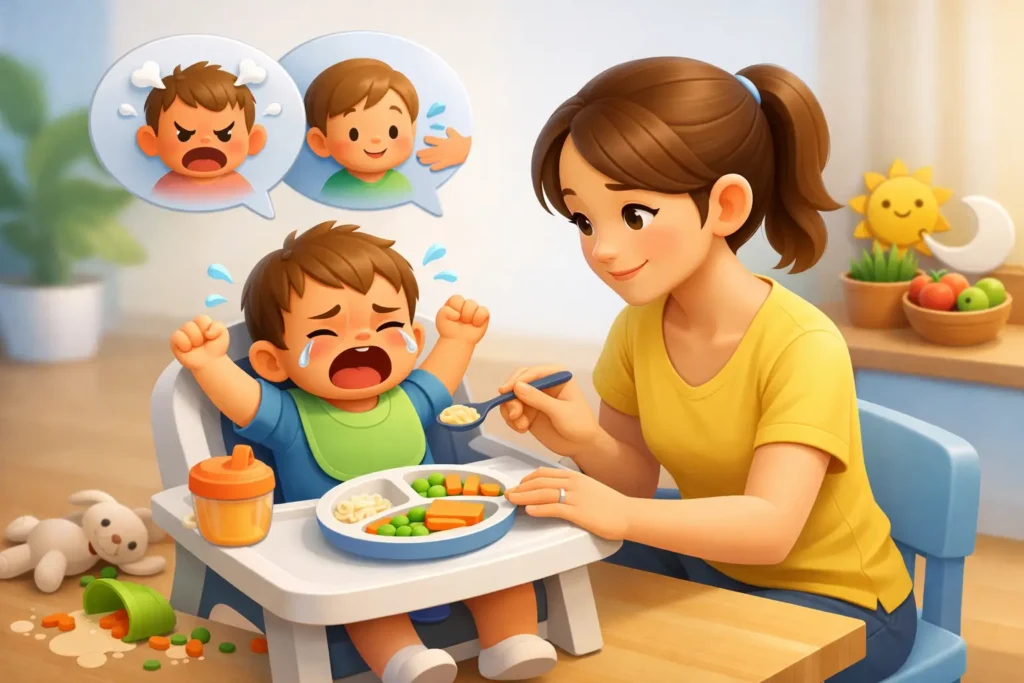
The plate hits the floor. Your toddler screams because the peas are touching the chicken. You are hungry, tired, and suddenly negotiating with a very small person who seems prepared to hold dinner hostage. If you are wondering how to end toddler mealtime tantrums, start here: your child is not trying to ruin the meal. They are having a hard moment, and a calmer, more playful pattern can help.
You do not need to make every food disappear from the plate or win a battle over three bites of broccoli. The goal is smaller and more powerful: help your child feel safe, capable, and included at the table. When pressure comes down, cooperation has room to grow.
Why Toddlers Melt Down at Mealtime
Toddlers have big feelings and very little ability to manage them. Dinner often arrives after a full day of noise, transitions, preschool, errands, or missed rest. Add hunger, unfamiliar food, a strong preference for predictability, and the desire to do everything independently, and the table can become the place where those feelings spill over.
Sometimes the food really is the problem. A new texture, sauce, mixed dish, or food that looks different than usual can feel overwhelming. Other times, your toddler is simply too hungry to wait calmly, too full from snacks, or too tired to sit. The tantrum may look like defiance, but it is often a signal that the moment is asking more of them than they can handle.
That is good news, because signals can be answered. You do not have to solve picky eating in one dinner. You only need to make the next meal feel a little less like a test.
How to End Toddler Mealtime Tantrums Without a Fight
The fastest way to make a tantrum bigger is to match it with bigger energy. When your child yells, refuses, or pushes food away, keep your voice low and your words short. Try: “You do not have to eat that right now. Food stays on the plate.” Then give them a moment to settle.
This does not mean your toddler gets to throw food or run the whole meal. Calm boundaries still matter. If food is being tossed, say, “Food stays on the table. If you throw it again, I will move your plate.” Follow through without a lecture. A neutral response teaches more than a long explanation in the middle of a meltdown.
Avoid turning each bite into a showdown. Repeated reminders, threats, and bargaining can make food feel loaded. The more a child senses that a bite has become a power struggle, the more tempting it is to say no. Instead, let them know what is available, stay nearby, and keep the focus on enjoying the time together.
Give tiny choices that feel real
Toddlers need appropriate control. Offer choices you are comfortable with: “Do you want your carrots in the blue bowl or next to your rice?” “Would you like a little chicken or a bigger piece?” “Do you want to use your fork or fingers?”
The choice is not whether you will prepare five separate dinners. It is a small way of saying, “You have a voice here.” That can be enough to lower resistance before it starts.
Keep one familiar food on the table
A meal does not need to be all favorites, but including one food your child usually accepts can make a new or less-loved food feel less threatening. It might be bread, berries, rice, cheese, or a simple vegetable they recognize.
This is not “giving in.” It gives your toddler something safe to eat while they practice being around other foods. Familiar food can make the table feel predictable, which is especially helpful when the rest of dinner is new.
Make the Meal Easier Before It Begins
Many dinner battles are decided long before anyone sits down. A predictable rhythm helps toddlers arrive at the table ready to eat, rather than frantic or completely uninterested. Aim for regular meals and snacks, with enough time between them for appetite to return. Water between meals is usually plenty unless your pediatrician has advised otherwise.
Keep portions tiny at first. A toddler-sized serving can be one noodle, one slice of cucumber, or one small spoonful. Large portions can look like a demand, while a tiny portion quietly says, “You can handle this.” Your child can always ask for more.
It also helps to set a clear end point. Most toddlers do not need to sit through a long family dinner. Around 15 to 20 minutes of engaged eating is often enough, though every child is different. When the meal is over, calmly clear the plate and move on. Chasing your toddler around with bites usually creates more stress for everyone.
Turn Bite Practice Into Play, Not Pressure
Toddlers learn through play. That is why a playful goal can work better than a serious speech about healthy eating. Instead of saying, “You need to eat three bites,” try inviting a low-stakes challenge: “Want to see what happens after one brave bite?” The focus shifts from proving obedience to participating in something fun.
Keep the goal flexible. Looking at a food, touching it, smelling it, licking it, or taking a tiny taste can all be progress. Some children will happily take bites when the experience feels light. Others need several calm exposures before they are ready. Both are normal.
Easy Eaters turns this moment into a simple table game, where each bite reveals more of a picture and leads to cheerful celebrations. For children who respond to visual surprises and a clear goal, it can replace repeated reminders with a fun reason to try. The point is not to trick a child into eating. It is to give them a positive, low-pressure way to practice.
Praise effort with specific, relaxed words. “You touched the avocado even though it was new.” “You took a tiny taste and decided you were done.” “You stayed at the table while we talked.” This kind of encouragement helps children build confidence without making them feel watched.
What to Say During a Mealtime Tantrum
In the moment, fewer words usually work best. Your toddler needs calm more than a persuasive argument. You can validate the feeling without changing the boundary: “You are mad because you wanted crackers. Crackers are not on the menu tonight. You may have what is here.”
If they are escalating, help them reset. “Your body looks upset. Let’s take a breath.” Some children need a quick break from the table. If you offer one, keep it boring and brief, then let them return when they are calm. Avoid replacing the meal with a preferred snack immediately after a refusal, since that can accidentally teach your child that a tantrum opens a different menu.
If your child says they are all done, let them be all done. You can save the food for later if it is safe to do so, but do not force a final bite. Trust grows when children learn that their body signals are respected.
Watch for Patterns, Not Perfect Meals
One tough dinner does not mean your approach is failing. Look at the week, not a single plate. Is your toddler sitting a little longer? Are they less upset when a new food appears? Did they touch something they used to reject? Those small wins are how calmer eating habits are built.
It may help to notice when tantrums happen most. Are they worse after daycare? On nights when dinner is late? When foods are mixed together? A simple adjustment, such as offering a small after-school snack or serving ingredients separately, can make a meaningful difference.
There are times to get extra support. Talk with your pediatrician if your child is losing weight, coughing or gagging often with food, has pain while eating, eats an extremely limited range of foods, or tantrums seem tied to significant distress. Getting help is not overreacting. It is a caring step toward making meals feel safe again.
Tonight, choose one small reset: a tiny portion, one familiar food, or a playful bite goal. Your toddler does not need a perfect meal to make progress. They need a parent who can offer calm, keep the pressure low, and believe that peaceful dinners can grow one little win at a time.