

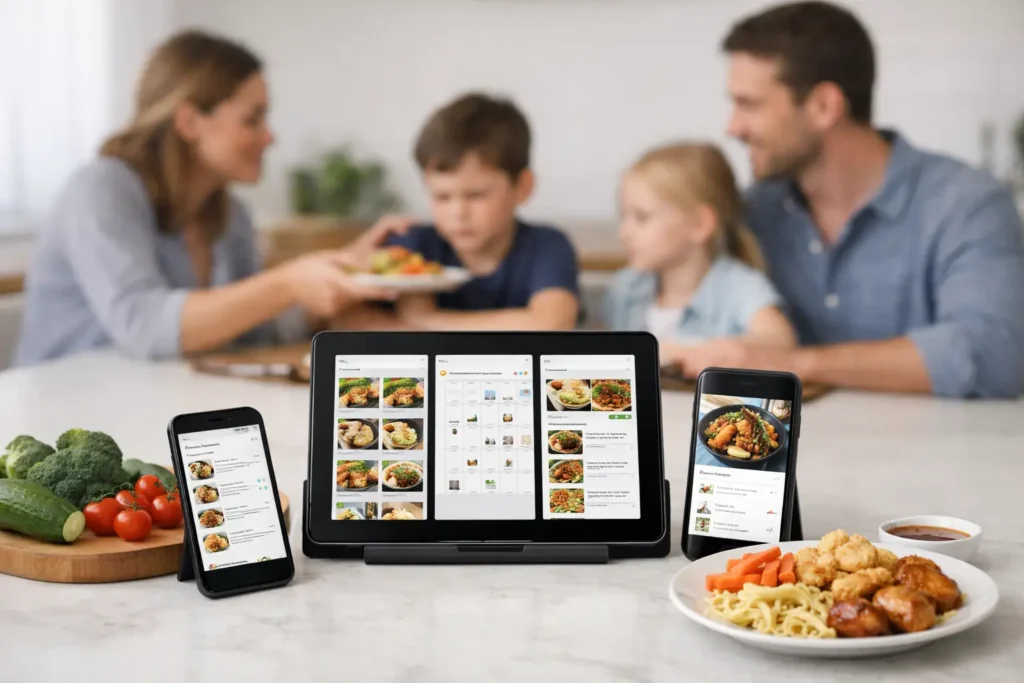
A meal-planning app can tell you what to cook. It cannot always help when your child sees that carefully chosen dinner and says, “Nope.” For families facing food refusal, tears, bargaining, or the same three accepted foods on repeat, a family meal apps comparison needs to look beyond recipes and shopping lists. The best choice depends on the problem you want help solving at the table.
Some apps make the behind-the-scenes work of feeding a family easier. Others focus on nutrition education, food tracking, or making meals more engaging for kids. All can have a place, but they do very different jobs. Here is how to choose one that gives your family more relief, not another task to manage.
Family Meal Apps Comparison: Start With the Real Problem
Before comparing features, name the moment that feels hardest. Are weeknights chaotic because you do not know what to make? Are grocery trips expensive and disorganized? Does your child happily eat familiar foods but refuse anything new? Or does everyone sit down tense because dinner often turns into a battle?
Meal planning apps are strongest when the question is, “What are we eating this week?” Picky eating apps are designed for the more emotional question: “How can I help my child feel safe enough to take a bite?” A grocery list will not solve food anxiety, and a fun bite game will not create a five-night menu. Choosing the right category first keeps expectations fair.
1. Meal Planning and Recipe Apps
Meal planning apps typically offer recipes, weekly calendars, serving-size adjustments, and saved family favorites. Many can create a shopping list from your selected meals. For parents carrying the mental load of dinner, that is genuinely useful. It reduces the 4 p.m. scramble and can make it easier to rotate meals instead of ordering takeout again.
The trade-off is that these apps often assume the challenge is deciding what to serve. If your child rejects the meal after it reaches the table, the app may not provide much support in that moment. A beautiful plan can still end with one adult negotiating “just one bite” while the food gets cold.
These tools are a good fit for families who need organization and whose children are generally open to eating what is served. They can also work well alongside a separate tool for picky eating.
2. Grocery List and Pantry Apps
Grocery and pantry apps focus on saving time, reducing duplicate purchases, and helping you use what is already in the kitchen. Some suggest recipes based on ingredients you have, while others let the whole household add items to a shared list.
Their biggest benefit is practical: fewer forgotten lunchbox staples, less food waste, and less back-and-forth about who needs to pick up milk. If shopping is the main source of family meal stress, this category can make a noticeable difference quickly.
But grocery tools do not usually change a child’s relationship with food. They may help you buy broccoli, but they cannot make broccoli feel less intimidating to a cautious eater. Think of them as household organizers, not mealtime coaches.
3. Nutrition and Food Tracking Apps
Nutrition-focused apps may track calories, nutrients, allergens, or food groups. For families managing a diagnosed medical condition, an allergy, or guidance from a clinician, detailed tracking can be helpful. Some parents also like seeing a broader picture of what their child eats over time, especially when one rough dinner makes it feel like they ate “nothing all day.”
For many picky eaters, though, constant tracking can add pressure. Young children are still learning how to listen to hunger, fullness, and unfamiliar flavors. Turning every bite into data may make food feel like a test, particularly if parents start chasing numbers at the table.
If you choose this kind of app, look for one that supports awareness without creating guilt. And if you have concerns about growth, swallowing, pain, severe food restriction, or nutritional deficiencies, talk with your child’s pediatrician or a qualified feeding professional rather than relying on an app alone.
4. Picky Eating and Mealtime Motivation Apps
This category is built for the dinner-table moment. Instead of asking parents to cook a perfect meal or convince a child with rewards unrelated to food, these apps aim to make trying food feel more playful, predictable, and low-pressure.
The most helpful options keep the focus on tiny wins. A look at a food, a touch, a lick, or a small bite can be part of progress for a child who is cautious around new foods. The goal is not to force a clean plate. It is to replace the feeling of “I have to” with a safer feeling of “Maybe I can try.”
Easy Eaters fits in this category by turning bites into a simple game. Children reveal pictures bite by bite, earn badges, and get a cheerful celebration for participating. That gives parents something concrete to offer at the table without resorting to bribes, threats, or a long speech about why vegetables are good for them.
The trade-off is that a motivation app is not a menu planner. You will still need food in the house and a basic idea of what to serve. But for parents whose biggest pain point is refusal and conflict, a tool that works while dinner is happening can be more valuable than another recipe collection.
What to Look For in Family Meal Apps
A good app should make life lighter. If setup takes an hour, if your child loses interest after one meal, or if the app makes you feel judged for what your family eats, it is probably not the right fit.
Look for a clear job. The best app does not need to do everything. It needs to do one useful thing reliably, whether that is creating a weekly menu, organizing the grocery list, or helping your child take one calm bite of a new food.
Also consider how it treats your child. For ages 2 to 8, the experience should be visual, quick to understand, and encouraging. Complex charts and long lessons are usually better suited to adults. Young kids respond to immediate feedback, small goals, and a little bit of fun.
Cost matters, too. A monthly subscription can be worthwhile when the app gets used several times a week and reduces daily friction. A free trial is a smart way to test whether it fits your actual dinner routine, not your idealized Sunday-night version of family life.
Privacy and flexibility deserve a quick check as well. You should be able to use the app without sharing more family information than necessary. And it should work with the foods you already eat, including cultural favorites, convenience meals, and those reliable safe foods that help a child come to the table feeling comfortable.
A Simple Way to Choose
If planning is your biggest obstacle, start with a meal planner. If shopping creates the chaos, try a shared grocery app. If medical needs require close attention, a nutrition tracker may be appropriate with professional guidance. If meals are planned and food is available but your child still refuses, cries, bargains, or shuts down, choose a playful picky-eating tool.
Many families will benefit from two simple tools rather than one overloaded app. For example, a parent might use a meal planner once a week and a mealtime motivation app during dinner. That combination respects the fact that feeding a family has two separate parts: preparing food and helping children learn to engage with it.
The Best App Is the One You Can Use on a Tuesday
The right choice should not ask you to become a different kind of parent. It should support the family you are already feeding, on the nights when everyone is tired and the pasta is getting cold. Start small, keep expectations gentle, and notice the wins that would have felt impossible a month ago: sitting at the table, touching a new food, or taking one proud bite. Those moments are how calmer meals begin.