

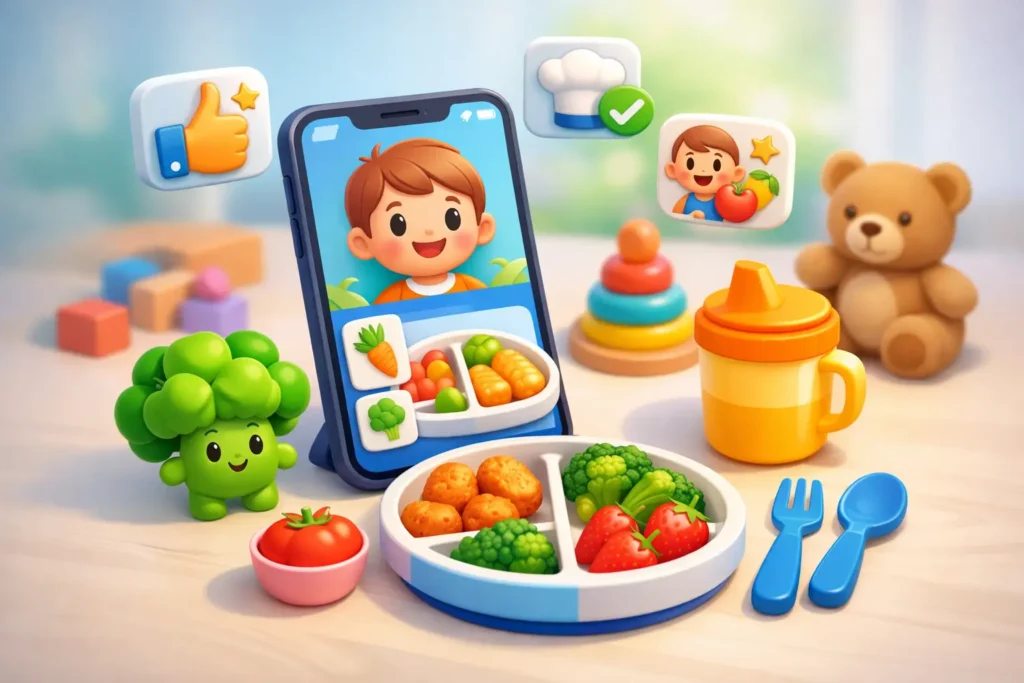
The broccoli is still on the plate. Your toddler has already said no three times. You are trying not to bargain, threaten, or make a second dinner, but everyone is getting hungry and the mood is slipping fast. If that scene feels familiar, finding the best picky eating app for toddlers is not really about adding more screen time. It is about finding a gentler way to get through the meal in front of you.
A helpful app should not turn parents into food police or ask toddlers to suddenly love every vegetable. It should make trying a bite feel safer, lighter, and more possible. For many families, that small shift is where calmer meals begin.
What Makes the Best Picky Eating App for Toddlers?
Toddlers do not need a lecture about nutrition at the table. They need a reason to stay curious when a food feels unfamiliar, looks suspicious, or simply is not the snack they wanted. The strongest picky eating apps understand that mealtime resistance is often emotional before it is nutritional.
Look for an app that gives your child a simple, immediate goal. A bite-based game works well because the action is clear: take a bite, make progress, see what happens next. There is no complicated chart to explain and no long-term reward that feels too far away for a 2-, 3-, or 4-year-old to care about.
The best tools also keep the pressure low. That means no countdowns that create panic, no shaming language, and no messages that suggest a child has failed because they did not clean their plate. Progress can be one tiny taste. It can be touching a new food, smelling it, or taking one brave bite after weeks of saying no.
A good toddler-friendly experience should be easy for a parent to start during a real dinner. If it takes ten minutes of setup, a detailed food log, or a special meal plan, it may be useful in theory but hard to use when you are holding a fork in one hand and helping a tired child in the other.
Why Bite-Based Play Can Change the Mood at Dinner
Many picky eating strategies accidentally put all the attention on the food your child is refusing. The more adults plead, negotiate, or watch, the bigger that food can feel. A playful bite-based activity moves attention somewhere else: the surprise waiting behind the next small step.
With visual reveals, badges, and cheerful celebrations, a bite becomes part of a game. Your child is not being asked to perform for you. They are working toward something fun. That distinction matters. It can lower the emotional temperature at the table and give kids a sense of control without handing over control of the whole meal.
This approach does not mean every bite will happen happily. Toddlers are still toddlers. Some nights they will be too tired, too wary, or too set on eating only crackers. But a playful routine gives you something more useful than another argument. It gives you a repeatable invitation: “Want to see what your next bite reveals?”
That invitation feels very different from “Just eat it.”
Features That Help in Real Life
When comparing picky eating apps, focus less on flashy promises and more on what will support your family at 6:15 p.m. The app should be simple enough for your child to understand and flexible enough for you to use without turning dinner into a production.
Here are the features that tend to matter most:
- Fast, bite-by-bite rewards that make progress feel exciting right away.
- Visual surprises and celebratory animations that keep the focus on fun rather than pressure.
- A child-friendly design with clear cues that young kids can follow.
- Low-pressure language that celebrates trying instead of demanding a clean plate.
- Easy access at the table so parents can use it on ordinary weeknights, not only when they have extra energy.
The trade-off is worth considering. An app that mainly tracks nutrients, meal plans, or eating schedules may be helpful for older children or parents who want detailed data. But it may not solve the immediate problem of a toddler refusing a single bite while dinner turns tense. For that moment, a simple game often has more power than another spreadsheet.
How to Use a Picky Eating App Without Creating New Pressure
Even the best app works better when it supports a calm family rhythm. Think of it as a friendly helper, not a bargaining chip. The goal is to make food exploration easier, not to make every meal a test.
Start by offering one familiar food alongside the food your child is learning about. This gives them something comfortable on the plate and helps prevent the new food from feeling like a trap. Then use the app to celebrate a very small step. For one child, that may be a lick of yogurt. For another, it may be one pea or a bite of chicken they used to reject.
Keep your language warm and neutral. Try, “You can decide if you want to make progress toward your surprise,” instead of, “You have to take three bites.” If your child says no, stay calm. You can leave the food available and try again another day. Repeated, low-pressure exposure is often more helpful than one dramatic showdown.
It also helps to set a gentle boundary around the game itself. The app is there to support eating, not to keep your child glued to a device through the entire meal. Let them check in for a reveal or celebration, then bring attention back to talking, laughing, and eating together.
A Better Alternative to Bribes and Dinner Battles
Parents often reach for bribes because they are exhausted, not because they want to make food a transaction. “Two bites and you can have dessert.” “Finish that and you get a treat.” It can work in the moment, but it may teach kids that vegetables are the annoying obstacle standing between them and the good stuff.
A playful eating app changes the experience without making candy, toys, or extra desserts the prize. The reward is built into the moment of trying: a picture appears, a badge is earned, or a small celebration says, “You did something brave.” That is positive reinforcement without the same high-stakes negotiation.
Easy Eaters is designed around this idea. It turns bites into a game with image reveals, progress, and happy celebrations, helping children feel motivated while parents step out of the role of mealtime negotiator.
This will not replace medical support if your child has trouble swallowing, frequent pain with eating, growth concerns, or an extremely limited diet. In those cases, speak with your pediatrician or a qualified feeding professional. But for everyday picky eating, a low-pressure tool can be a welcome reset.
When an App Is Most Likely to Help
A picky eating app tends to be especially useful when your child enjoys games, responds well to visual rewards, or gets stuck in a cycle of refusing foods before they have even tasted them. It can also help parents who know the feeding advice but struggle to use it while managing a busy evening.
Consistency matters more than perfection. Use the app for a few minutes at meals when you have the energy, not as a rule you must enforce every night. Celebrate the effort you see, even if it is tiny. A child who once pushed the plate away may first tolerate the food nearby, then touch it, then take a taste weeks later. That is real progress.
The best picky eating app for toddlers is the one that makes your family feel more capable, not more judged. When dinner stops being a battle to win, your child has more room to become curious – and you have more room to enjoy being at the table with them.